



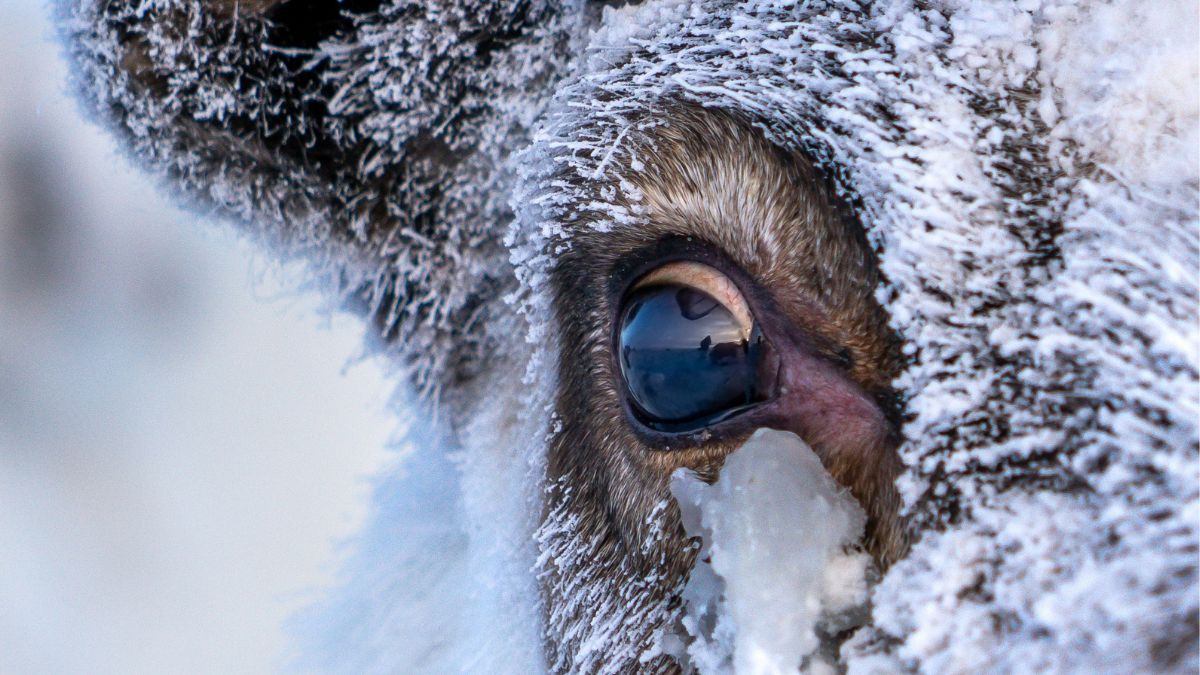
Reindeer possess a unique adaptation: their eye color changes with the seasons, reflecting the Arctic sky. In summer, their eyes display a golden and turquoise hue, akin to a cat’s eye, while in winter, they shift to a deep blue. This transformation is thought to function as “sunglasses,” enhancing their vision in the dim light of prolonged Arctic dusk, allowing them to see better foraging spots and potential predators like wolves.
The adaptation involves a special layer in the eye called the tapetum lucidum, which varies with the seasons. Researchers have noted that during winter, the tapetum may change structurally to optimize vision in low light, although the exact mechanisms remain unclear. Studies indicate that continuous dilation of the pupil in dark conditions influences this fluid balance and structural change.
Despite the unique features of reindeer eyes, it is possible that other mammals in similar dark environments might exhibit comparable adaptations. Further research may shed light on how their eye structure transitions between seasons.
Source link
