



The Bay Area has recently experienced a series of earthquakes, particularly around San Ramon, including a notable magnitude 4 quake on Friday and a 3.9 magnitude quake on Saturday. Since November 9, over 80 earthquakes of magnitude 2 or higher have been recorded. While these quakes are relatively small, they raise concerns about a potential “big earthquake.” Experts, like U.S. Geological Survey seismologist Annemarie Baltai, emphasize that while minor quakes can precede larger ones, they often don’t indicate the timing or location of significant seismic events.
Historical data suggests a high likelihood of major earthquakes in California in the coming decades. For instance, there’s a 72% chance of a magnitude 6.7 or greater quake in the San Francisco Bay Area by 2043. Notably, recent moderate-sized earthquake swarms have occurred in Southern California without leading to significant events. The current cluster of small quakes in San Ramon is typical for the region, particularly near the Calaveras Fault, known for its potential to generate large earthquakes.
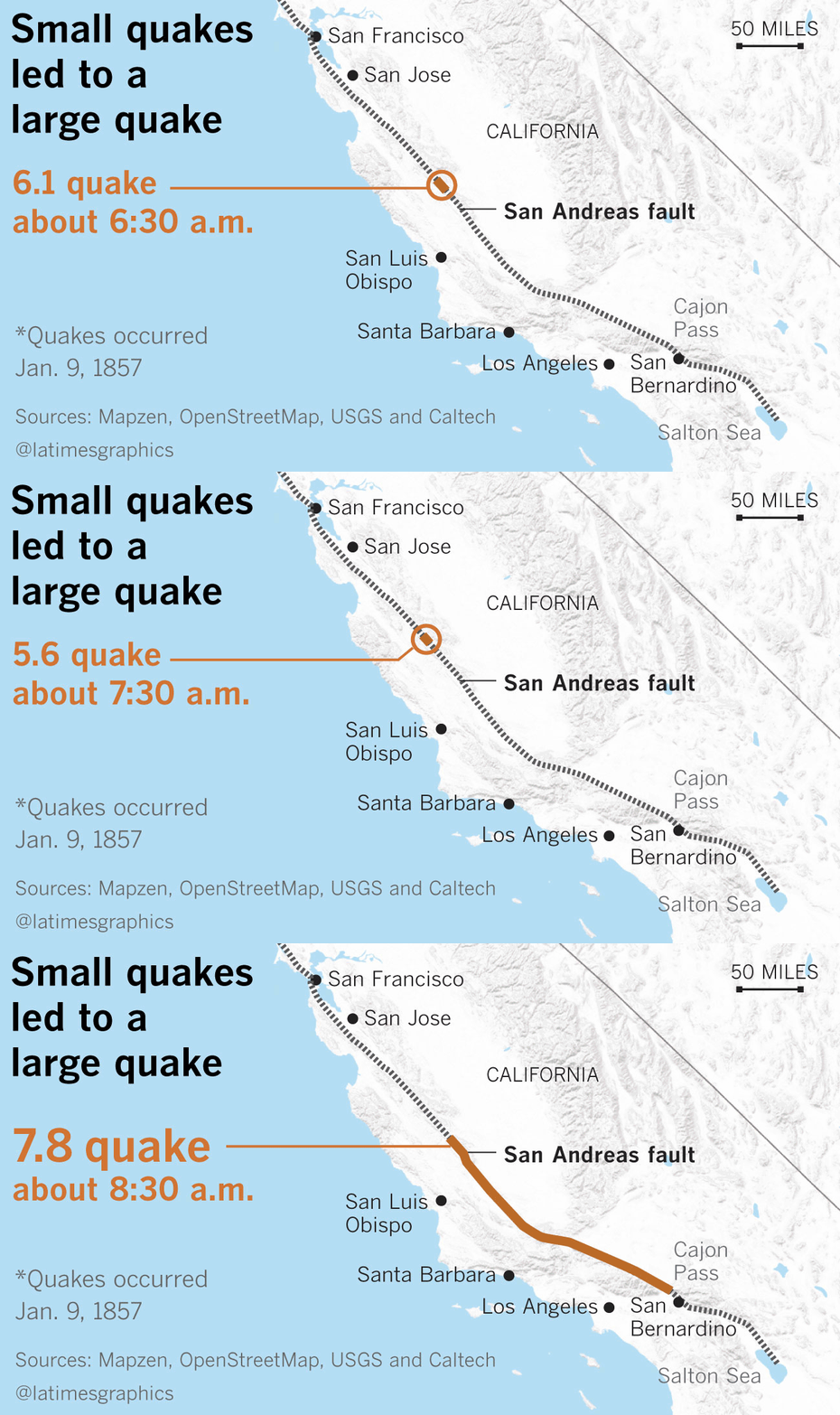
Previous patterns show that small tremors may sometimes precede larger quakes, but many significant earthquakes occur without clear precursor swarms. The article discusses historical examples, including the 1857 San Andreas Fault earthquake, which had preceding tremors. Similarly, the 2019 Ridgecrest earthquakes were preceded by smaller events. Residents are understandably concerned about the frequency of small earthquakes, but experts remind that not all tremors signal an imminent large earthquake.
Source link
