



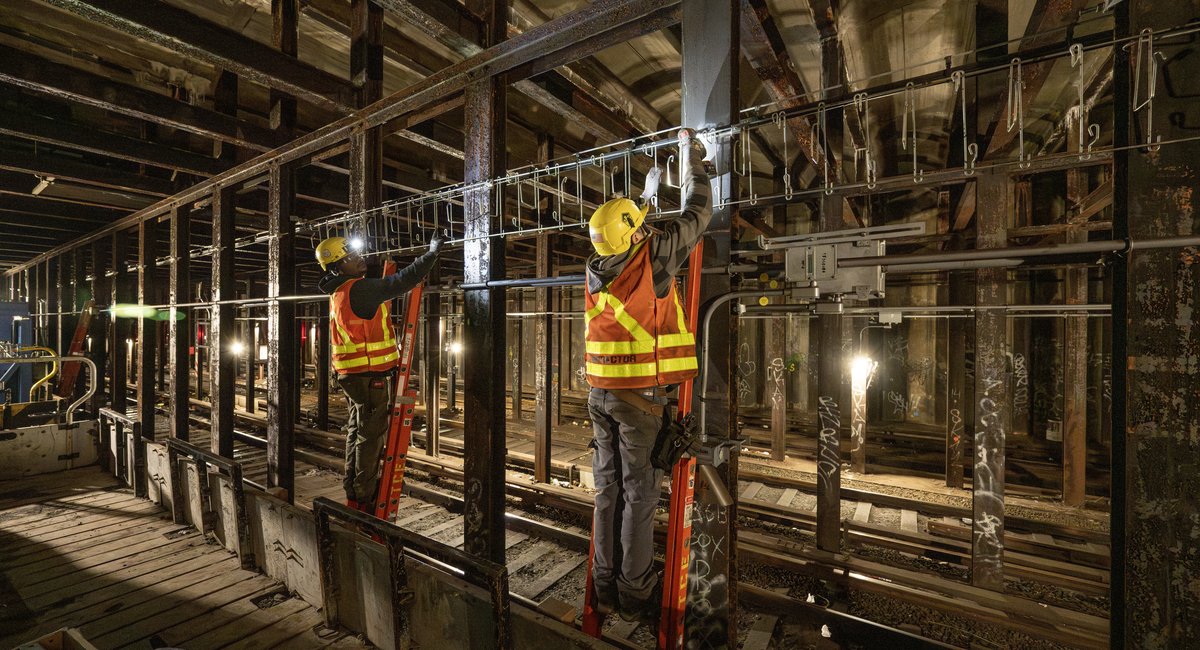
The modernization of New York City’s subway system has faced delays, requiring the L-Train to soon replace the state-of-the-art communication-based train control (CBTC) technology installed at the start of the 21st century. This system, designed to enhance train speeds and reduce spacing through computer-driven signals, is scheduled to reach its end of service life in 2028, almost 25 years after its implementation. In contrast, many older subway signal systems, some dating back to the 1930s, are still in use despite being inefficient and prone to breakdowns.
MTA officials posit that upgrading to modern signal systems is essential for improving subway services, but the timeline suggests that less than half of the system will receive such technology over the next decade. The urgency for an L-Train CBTC upgrade underscores the MTA’s reliance on millions of daily riders. Sean Fitzpatrick from the MTA’s construction division emphasized the need to modernize the zone controllers that ensure safe distances between trains and suggested upgrading to wireless communication for train radios.
Fitzpatrick reassured that these upgrades would minimally disrupt service, focusing more on replacing outdated components rather than the trains themselves. The MTA’s upcoming five-year construction plan allocates $5.4 billion towards modernization efforts, particularly for lines like the A Train, Rockaway Shuttle, and segments of the N, Q, R, and W lines, but lacks detailed plans for other lines.
Consultant Tracy Bowdwin, who was involved in the original CBTC implementation, mentioned that the MTA may adopt newer, train-centric technologies, highlighting the long-term benefits of such upgrades despite short-term inconveniences for riders. The modernization aims to enhance the reliability and efficiency of subway services for future users.
Source link
