



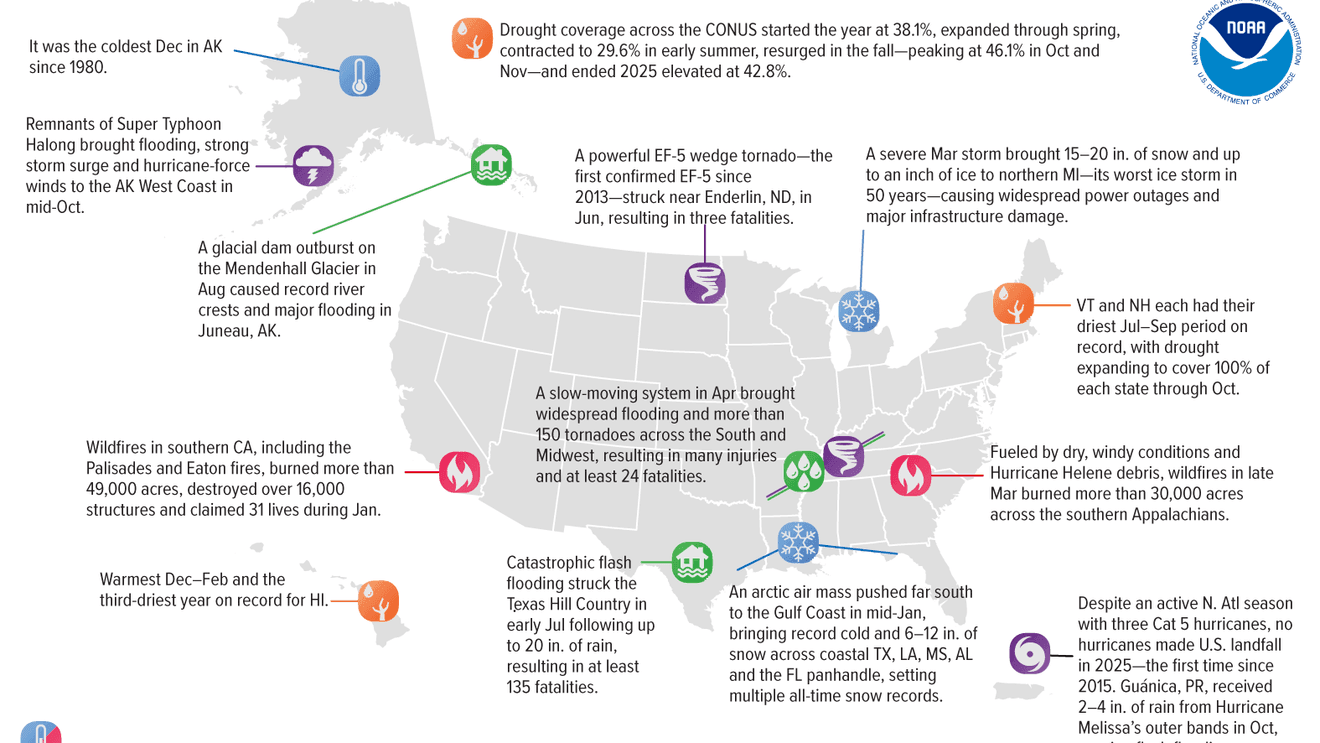
In NOAA’s 2025 global climate analysis, it was reported that 2025 was the third warmest year on record, following the warmest year, 2024, and the second warmest, 2023. The report highlights significant regional temperature and precipitation changes and predicts severe weather impacts.
Key findings include:
-
U.S. Data: 2025 marked the fourth warmest year in the U.S., with record-high temperatures in October.
-
Regional Highlights:
- Oceania: Second warmest year recorded.
- Arctic: Second warmest year; sea ice extent reached its 10th smallest minimum.
- Antarctica: Fourth warmest year; sea ice also recorded historically low maximums.
- Notable Weather Events:
- UK: Storm Éowyn brought heavy rain and winds.
- Asia: Notably, Japan experienced record heat leading to health issues and crop damage, and Thailand suffered from devastating flooding due to record rainfall.
- Congo and South Korea: Landslides from heavy rains and wildfires resulted in significant destruction and casualties.
- North America: Severe flooding from Tropical Storm Barry caused major damage in Texas, while Hurricane Eric hit Mexico.
This report illustrates the increasing frequency and intensity of severe weather events linked to rising global temperatures. For detailed data and impacts, NOAA’s full report is available.
