



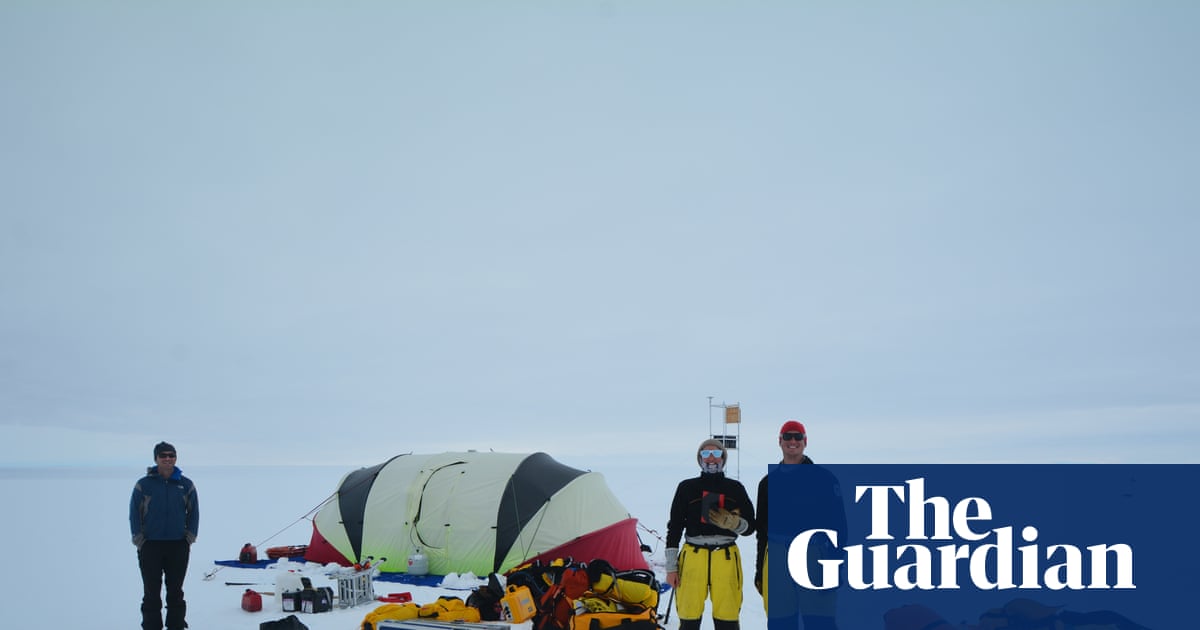
Dr. Ben Galton-Fenzi’s research on the Totten Ice Shelf in Antarctica reveals urgent concerns about the melting ice and its implications for global sea level rise. During his 2018-2019 summer expeditions, he battled extreme cold to retrieve radar equipment essential for assessing the ice thickness. His focus, however, is on the underwater layers: approximately two kilometers beneath the surface, where rising ocean temperatures threaten to destabilize ice sheets.
Each year, Antarctica loses around 843 billion tons of ice mass, akin to 843 massive one-kilometer ice cubes. This melting contributes to a potential sea level rise of up to 15 meters if the most vulnerable sections of ice completely melt. Despite some gains in mass from increased snowfall due to global warming, the overall trend is concerning.
Galton-Fenzi’s collaborative study, which integrates data from nine research groups, reveals that understanding oceanic mass loss is critical to projecting Antarctic ice sheet behavior and global sea levels. New technologies, like autonomous Argo floats, are providing insights into the typically unreachable conditions beneath the ice.
Oceanographers like Dr. Steve Rintoul stress the lack of data on ice shelf dynamics and highlight dangerous conditions leading to potential rapid melting, especially in the Denman Glacier region, capable of contributing 1.5 meters to sea level rise. The uncertainty surrounding these changes complicates predictions about global impacts, including disruptions to major ocean currents.
Dr. Sue Cook emphasizes the need for models to understand future changes while noting that accelerated ice loss could occur faster than previously anticipated, driven by greenhouse gas emissions. As researchers grapple with these challenges, it is evident that the consequences of climate change are becoming increasingly urgent.
Source link
