



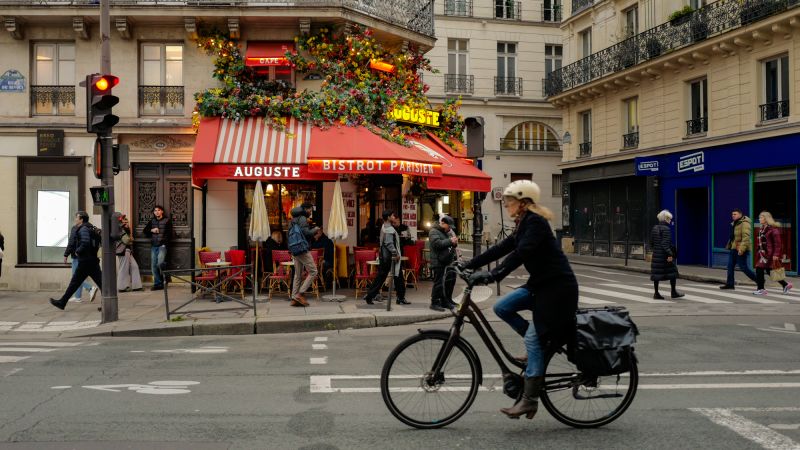
The article discusses the transformation of Paris over the past decade, particularly during the tenure of Anne Hidalgo, the city’s first female mayor. Hidalgo, elected in 2014, prioritized reducing vehicle congestion and enhancing pedestrian and bicycle access, leading to more pedestrian-friendly streets and extensive bike lanes. This shift has improved air quality and garnered praise from tourists and some residents.
Despite these changes, many Parisians are unhappy with Hidalgo’s departure and express dissatisfaction with ongoing traffic congestion and public transport challenges. Complaints persist about traffic jams and the impact of Hidalgo’s policies on bus services, which have seen a significant decrease in usage.
While Hidalgo’s efforts have increased the number of cyclists—nearly a third of Parisians now ride bicycles—there are safety concerns from pedestrians regarding cyclist behavior and the integration of bike lanes with car traffic. Critics argue that her policies have not sufficiently addressed the needs of residents, with polls indicating that a majority feel Paris is not heading in the right direction.
As Hidalgo steps down, the future of Paris’s urban landscape will depend on her successor, who may continue or change her initiatives in the upcoming elections. Throughout her tenure, Hidalgo has faced significant challenges, but her legacy includes a commitment to making Paris a more walkable and bike-friendly city, reflecting a broader shift in urban planning priorities.
Source link
