



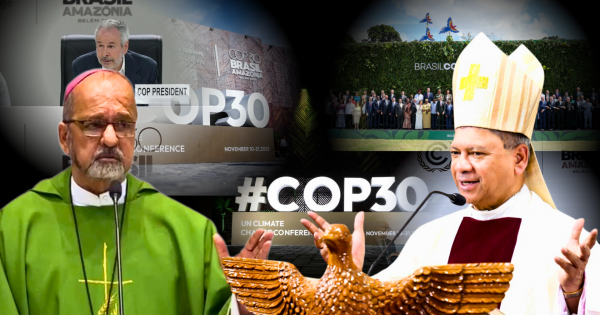
Following COP 30, the Federation of Bishops’ Conferences of Asia (FABC) urged for enhanced interfaith cooperation to tackle the climate crisis. This call was articulated in a joint statement from the FABC’s Human Development and Ecumenical Affairs Departments, shared during a meeting in Bangkok on March 5, 2026. The meeting featured leadership from various Anglican Conferences across Asia.
The statement, signed by Bishop Emeritus Alwyn D’Silva and Archbishop Emeritus Felix Machado, reflected on COP30’s outcomes, highlighting both achievements and significant gaps in global climate action. The church’s role in advocating for vulnerable communities such as the poor and indigenous peoples was emphasized, along with the need for climate initiatives to focus on stewardship, justice, and accountability, especially from wealthier nations responsible for much of the environmental damage.
Key takeaways from COP30 included a commitment to mobilize $1.3 trillion annually by 2035 for developing nations, a compensation fund, and global indicators for climate adaptation. However, critical issues like the lack of a binding agreement on fossil fuel phase-out and the gap in meeting the 1.5°C warming target were noted.
The FABC called for renewed engagement from the Church, particularly through interfaith collaboration to raise awareness of the climate crisis, and outlined ten priority actions, such as data-driven advocacy, leadership support in vulnerable communities, and environmental education. The initiative aims to strengthen interfaith solidarity and catalyze ecological transformation, while acknowledging that political will remains a significant hurdle.
Ultimately, the FABC encourages the Church to maintain its moral voice in partnership with other faiths to address global climate challenges and protect the environment for future generations.
Source link
