



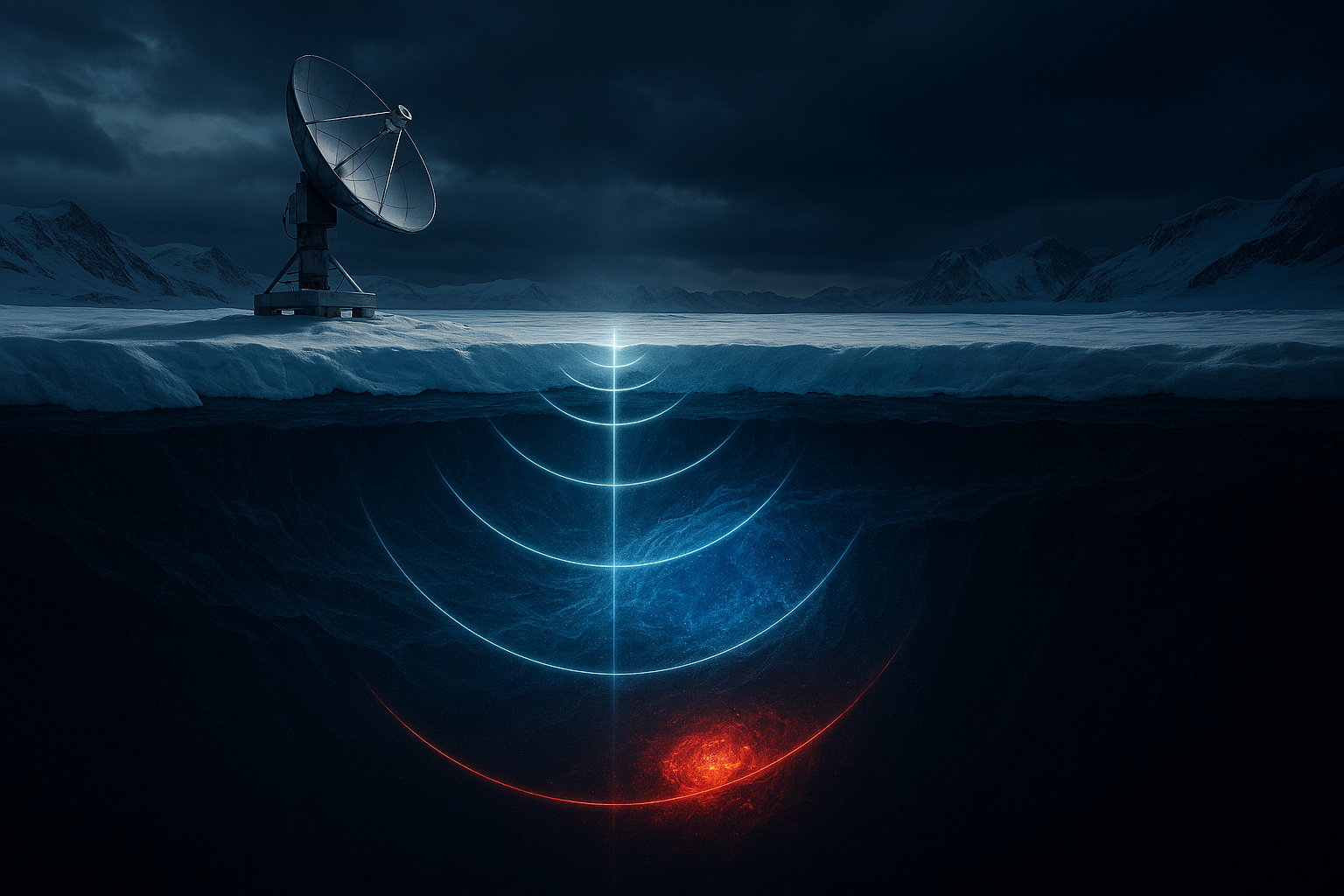
NASA’s radar has detected an unusual reflection 1.5 kilometers beneath Antarctica’s ice, suggesting the presence of liquid water and internal heat that could accelerate ice melting. This discovery, considered an “impossible echo,” challenges traditional models which assumed Antarctic melting occurs primarily through surface and ocean contact. Instead, it indicates a possible third mechanism: internal heating from the Earth.
The radar’s findings show unexpectedly high reflectivity at this depth, similar to liquid water, which raises concerns that current climate models may underestimate ice loss rates from Antarctica, a key factor in global sea level rise. Research indicates that geothermal activity may keep pockets of water liquid under pressure, even at freezing temperatures.
As Antarctica contains about 90% of the Earth’s ice, these discoveries could significantly impact predictions of sea level rise. The study of over 400 subglacial lakes shows intricate dynamics affecting ice movement, potentially accelerating glacial flow into the ocean.
Researchers stress the need for further investigation using advanced radar, gravity sensors, and seismic studies, highlighting that our understanding of Antarctica’s underlying processes remains limited. This “impossible echo” not only raises questions about current models but underscores the complex factors influencing the Earth’s climate system.
Source link
