



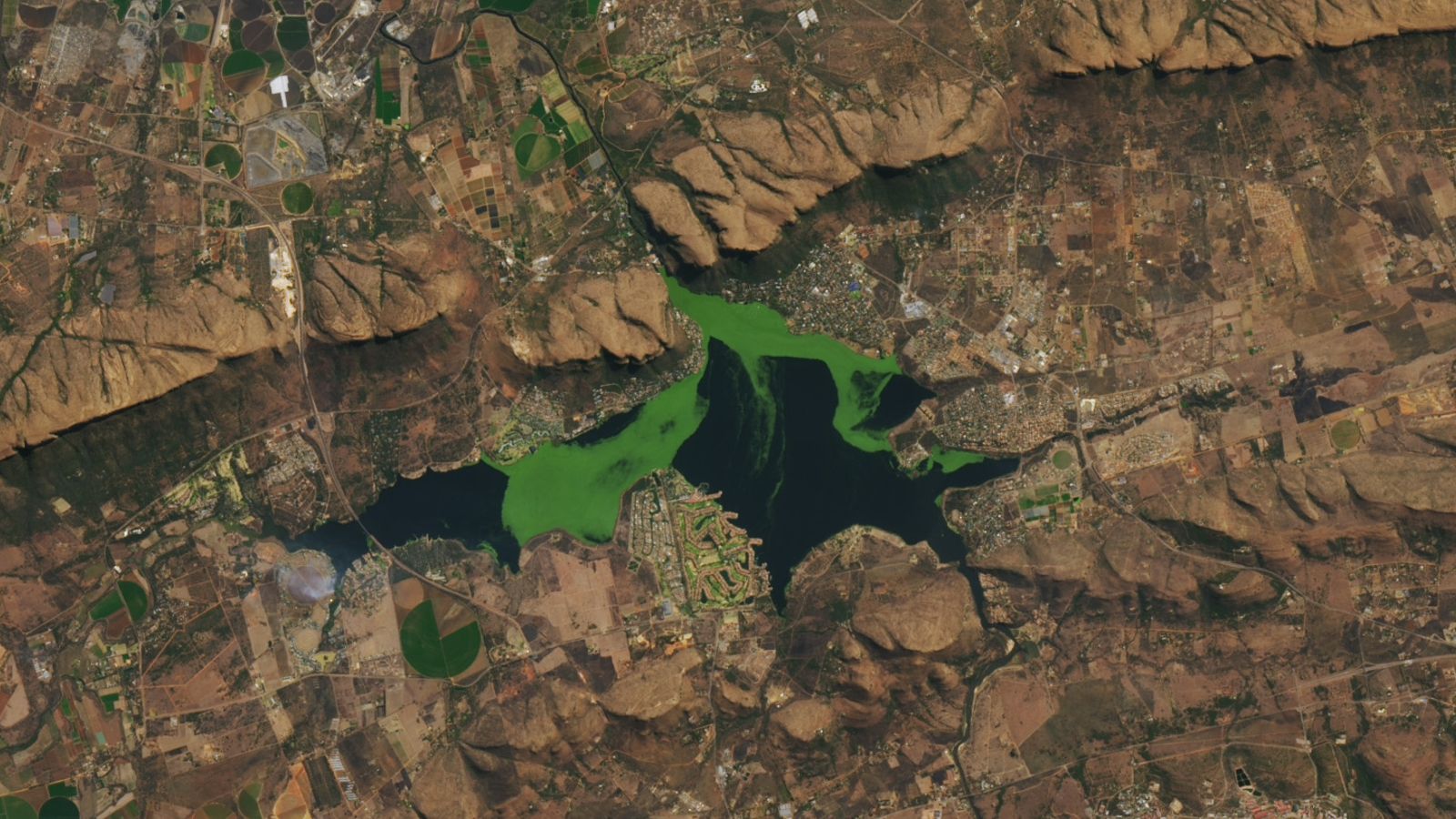
The article discusses a satellite photo taken by Landsat 8 on August 10, 2022, showing vibrant green toxic algae and other aquatic plants at Hartbeespoort Dam in South Africa. This dam, built in the 1920s and located near the Magaliesberg Mountains, serves recreational and water supply purposes but is plagued by continuous hypereutrophication due to excessive nutrients, primarily from agricultural runoff.
The algae blooms create “dead zones” that deplete oxygen, leading to mass fish die-offs, including significant occurrences in April and November 2023. Invasive species like water hyacinth and Salvinia minima contribute to these issues. Efforts to manage the blooms have been historically unsuccessful due to cost. The article highlights the environmental and health impacts of the toxins released in the water, warning of the ongoing threat posed to both wildlife and humans engaged in water activities.
Overall, the situation at Hartbeespoort Dam serves as a pressing example of the consequences of nutrient pollution and its ripple effects on ecosystems.
Source link
