



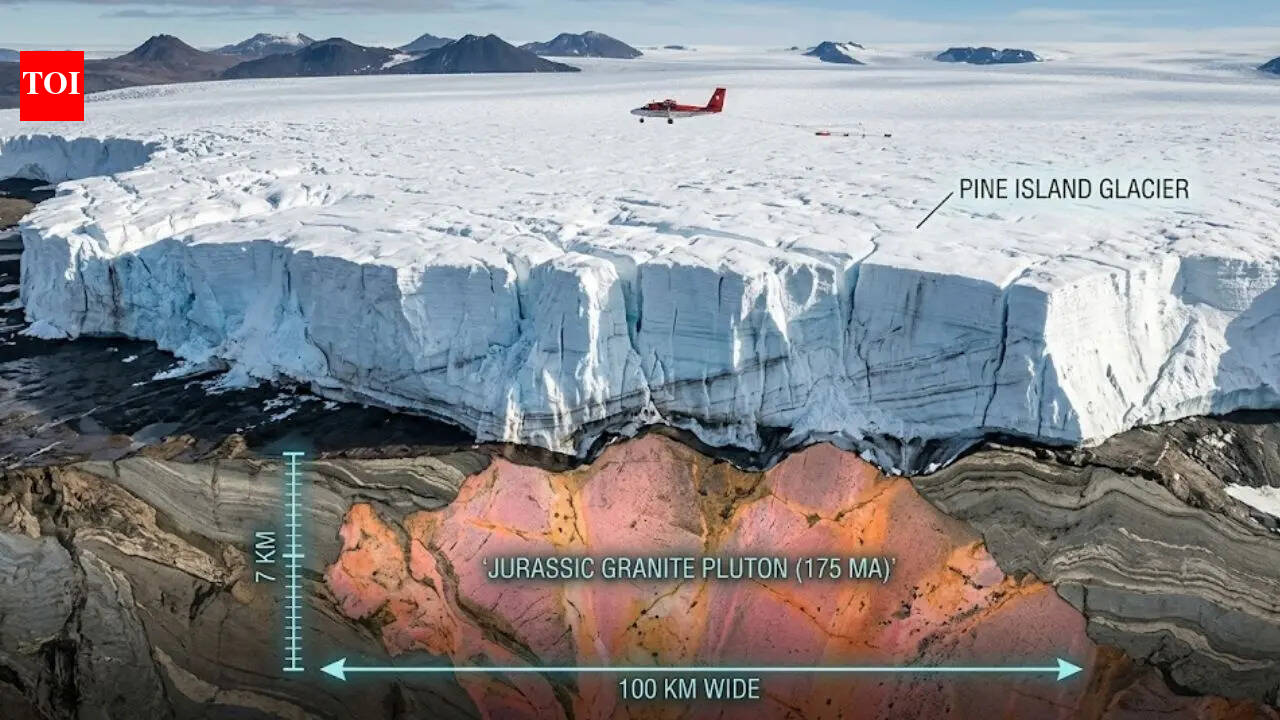
Scientists from the British Antarctic Survey have made a significant discovery beneath the West Antarctic Ice Sheet (WAIS): a large granite body, about 100 kilometers wide and extending 7 kilometers deep, which could reshape our understanding of climate change and geological history. This granite, known as a “hidden giant,” has a surface area approximately half the size of Wales and was found through airborne geophysical surveys.
The investigation began with the discovery of unusual pink granite rocks atop a black volcano in the Hudson Mountains, which were traced back to ancient ice sheet movement. Using advanced dating methods, researchers determined these rocks are about 175 million years old, dating from the Jurassic period when the Gondwana supercontinent began to fragment.
The granite plays a crucial role in ice flow dynamics, especially for the rapidly melting Pine Island Glacier, one of the leading contributors to global sea level rise. Its structural integrity creates “stick points” that slow glacial movement into the ocean. Understanding this granite body is vital for accurate predictions of future sea level changes.
Additionally, the granite’s composition offers insights into Gondwana’s geological history, revealing a past of significant tectonic activity. This research provides a more comprehensive understanding of the West Antarctic Rift and the geological processes that shaped the region.
Source link
