



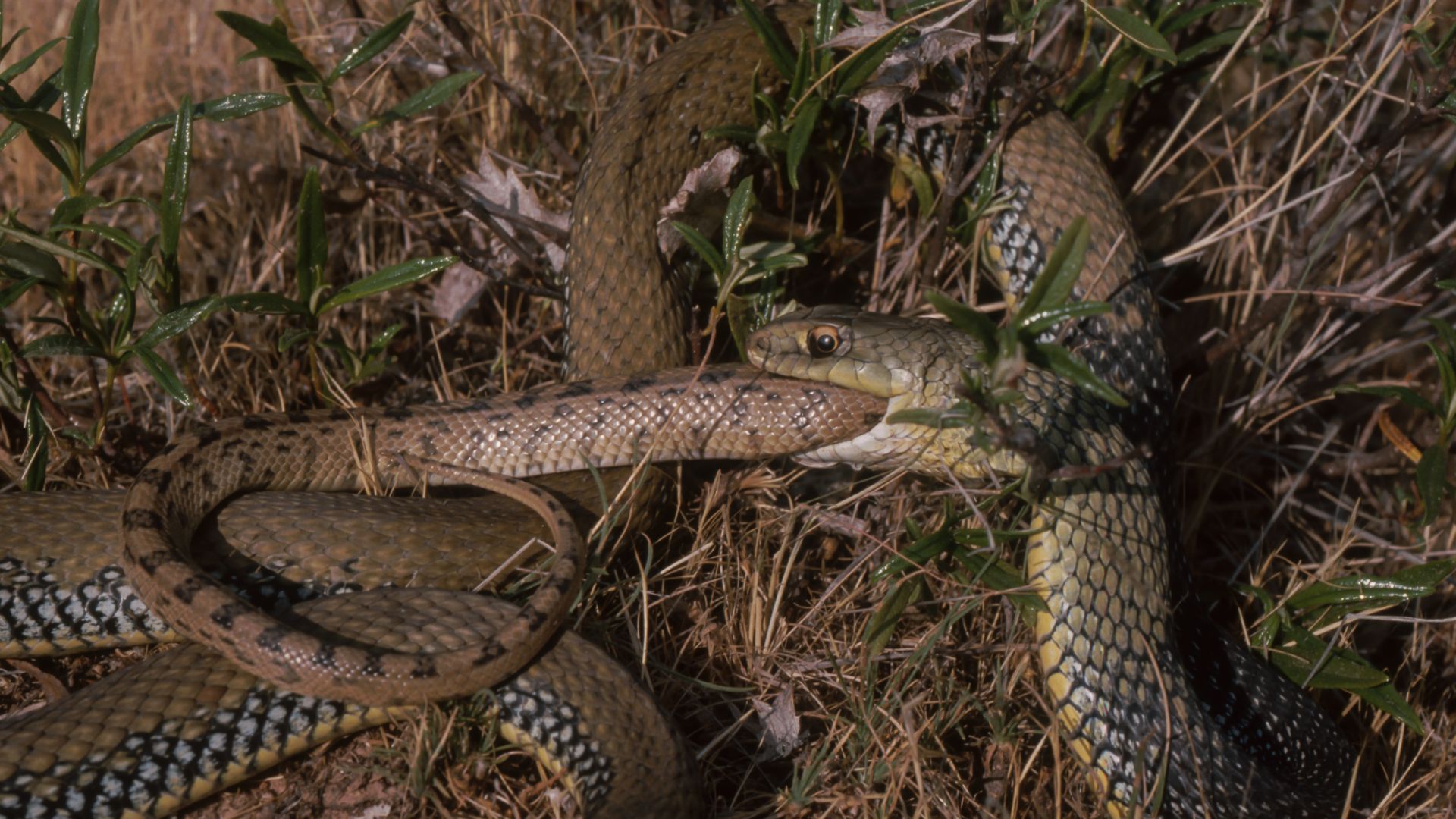
A recent study published in the journal Biological Reviews on November 2, 2025, reveals that cannibalism among snakes is more common than previously thought, occurring in various lineages due to environmental stressors. Researchers analyzed 503 reports of cannibalism across 207 snake species and found that this behavior has evolved independently at least 11 times. Lead author Bruna Falcão noted that while cannibalism is viewed negatively in humans, it plays a beneficial role in snakes’ ecological adaptation.
Historically, cannibalism in the animal kingdom has been observed in species like spiders and praying mantises, raising questions about its evolutionary benefits. It may help with population control and resource management. The study indicated that snakes from the families Colubridae, Viperidae, and Prunidae frequently exhibited this behavior, often driven by factors like food scarcity or captivity stress.
Interestingly, nearly half of the species reported to engage in cannibalism have a generalized diet, allowing them to exploit available food resources opportunistically. The study also highlights that cannibalism correlates with jaw structure, as only snakes capable of preying on others can exhibit this behavior. Overall, the findings suggest that cannibalism reflects snakes’ adaptability and readiness to thrive in various ecological niches, with Falcão emphasizing the need for further exploration of this fascinating subject.
