



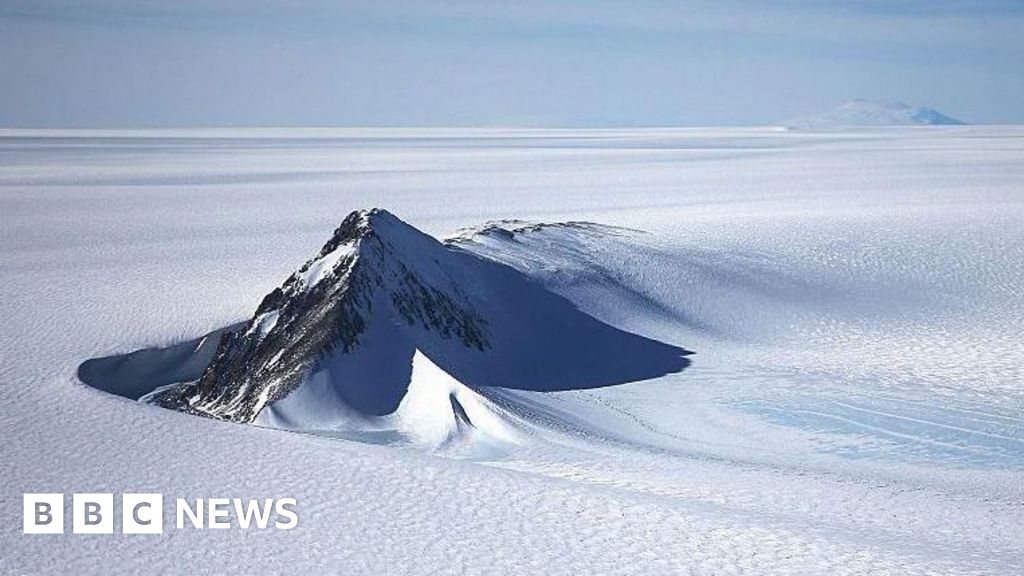
A new map detailing the landscape beneath Antarctica’s ice has been created, significantly enhancing scientists’ understanding of the continent. Using satellite data and insights into glacier movement, researchers have discovered thousands of previously uncharted hills and ridges, leading to clearer images of hidden mountain ranges.
Dr. Helen Ockenden, the study’s lead author, compared this mapping advancement to moving from grainy film to high-resolution digital images. Previously, the knowledge of Antarctica’s subsurface was limited, often providing less detail than what is known about some planetary surfaces.
Traditional mapping methods, which utilized radar measures along sparse survey lines, often missed intricate geological features. The new approach combines satellite data, physics of ice movement, and past trajectories to create a comprehensive view of Antarctica’s topography. Notably, researchers found a significant underwater channel in the Maud Glacier Basin, extending 400 kilometers.
Despite uncertainties in the map, researchers believe it will enhance understanding of how climate change affects Antarctica, particularly its role in global sea level rise. Further studies will build on this foundation to better predict future changes, making this research a critical step in climate science. The findings are published in the journal Science.
