



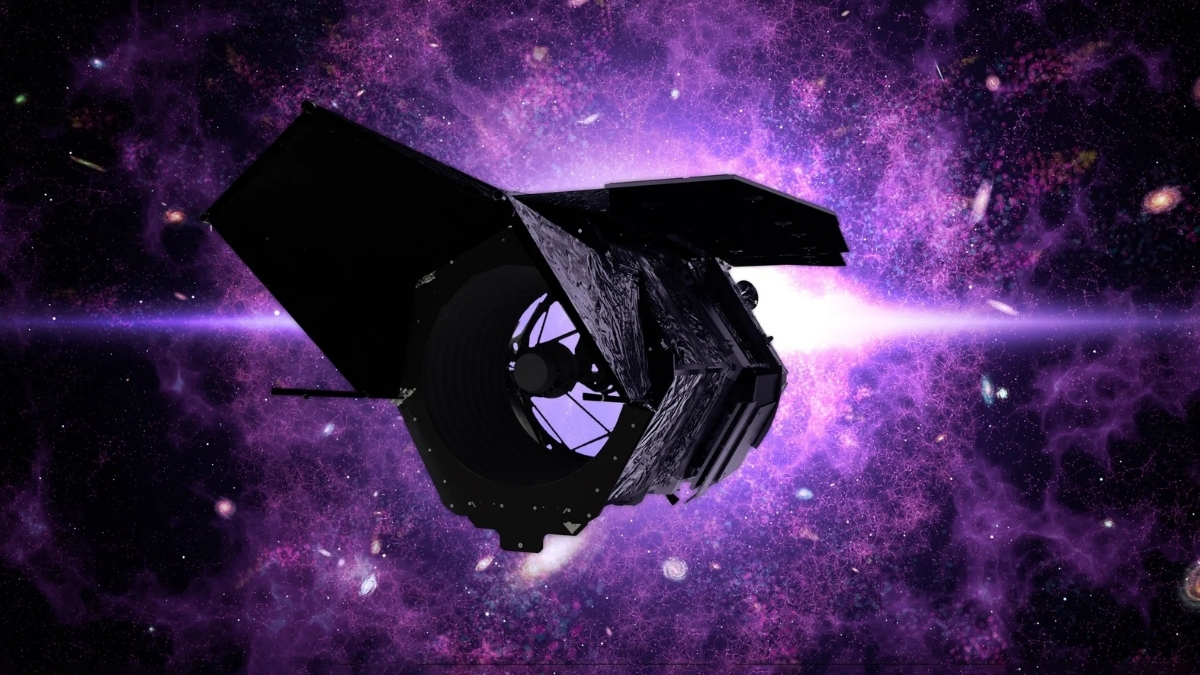
On November 25, NASA completed the assembly of the Nancy Grace Roman Telescope at the Goddard Space Flight Center, paving the way for a possible launch as early as fall 2026. This advanced infrared telescope will use its Wide Field Instrument (WFI) and Coronagraph Instrument (CGI) to conduct a range of scientific studies, including examining dark energy, cataloging exoplanets, and detecting primordial black holes.
The WFI offers a field of view 100 times larger than the Hubble Space Telescope, while the CGI can block out starlight to directly image exoplanets. The telescope is expected to reveal vast amounts of new astronomical data, including tens of thousands of supernovae and numerous evolving exoplanet systems during its primary five-year mission.
NASA’s commitment to this telescope reflects significant advancements in engineering and scientific inquiry. The mission is expected to generate around 20,000 terabytes of data, comparable to the total data collected by Hubble in its first 30 years. Crucially, it is also equipped to tackle questions about dark energy, which drives the universe’s accelerated expansion.
The Roman Telescope represents a step forward in understanding celestial phenomena and will contribute valuable data to astronomers for decades to come, making its launch potentially one of the most significant events in modern astronomy.
Source link
