



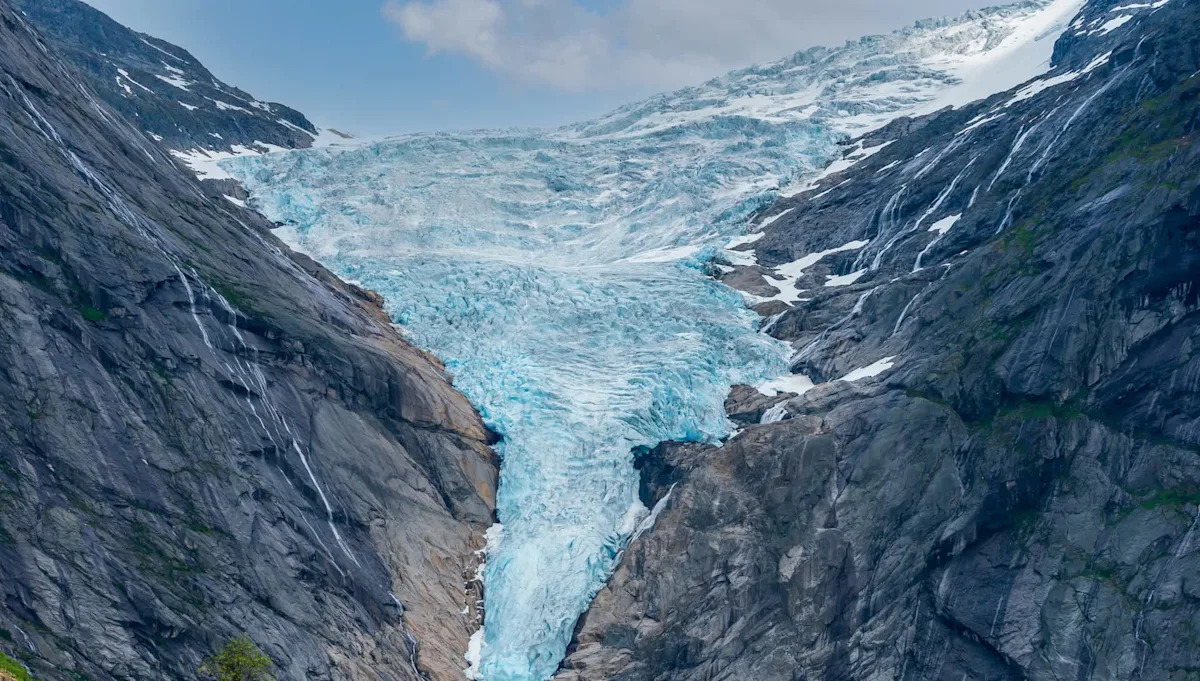
Rising global temperatures are linked to various adverse effects, such as sea level rise and severe weather, but they are also revealing ancient artifacts, including a recently discovered 1,500-year-old reindeer trap in Norway. Uncovered by melting ice on Mount Aurlandsferret, this trap made of logs is significant as it is the first wooden mass-capturing facility found in ice in Norway, offering insights into ancient hunting practices.
Archaeologist Øystein Skaar noted that the artifacts found—like reindeer antlers and iron spearheads—are well-preserved thanks to the cold climate, which acted as a natural freezer. This melting ice and snow has led to a feedback loop that accelerates warming, decreasing the planet’s ability to cool itself.
The discovery not only sheds light on the importance of reindeer hunting during the Early Iron Age but also raises concerns over rapid ice melt and potential loss of undiscovered historical locations. In response, researchers aim to gather more insights into these ancient cultures, while governments are working to address rising temperatures through carbon reduction initiatives and increased use of renewable energy sources.
Source link
