



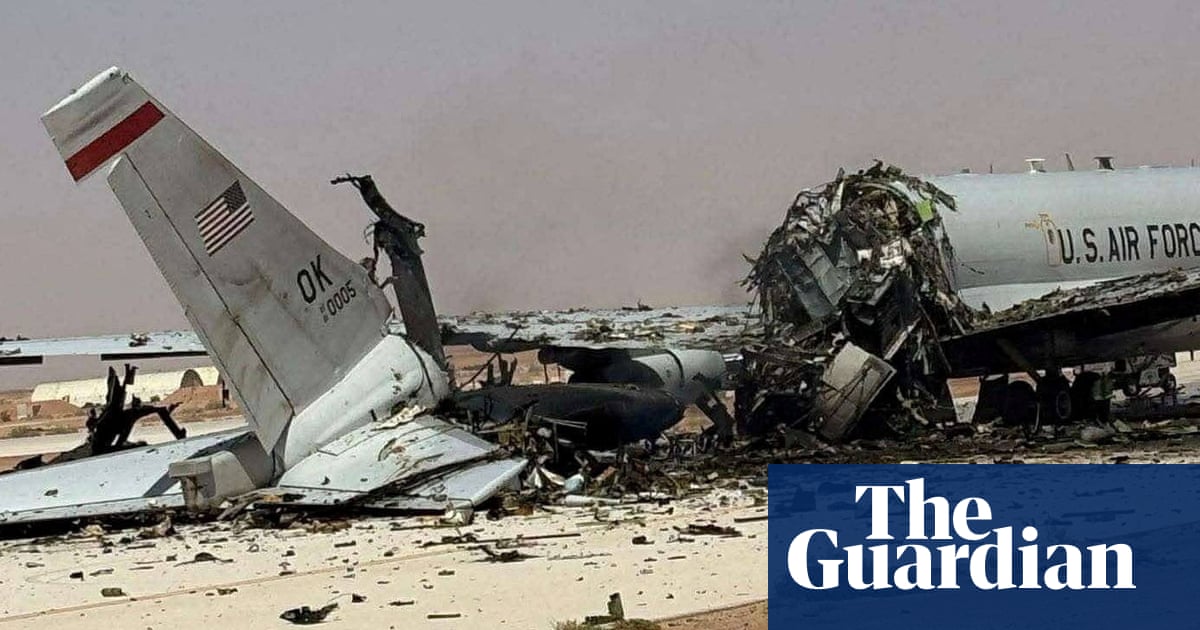
The recent destruction of a U.S. E-3 Sentry AWACS aircraft during a direct Iranian attack on Saudi Arabia’s Prince Sultan Air Base on March 27 has prompted scrutiny over the vulnerability of critical surveillance assets. The E-3, equipped with advanced surveillance capabilities to detect airborne threats and monitor battlefield activities, was directly hit in a precise strike that also injured U.S. service members and damaged refueling planes.
Despite ongoing U.S. and Israeli air operations against Iran, this incident highlights Iran’s continued ability to target key assets in the region effectively. Ukrainian President Volodymyr Zelenskiy revealed that Russian satellites had surveyed the base multiple times prior to the attack, suggesting that Iranian forces were well-prepared. Although Russian officials denied allegations of providing intelligence to Iran regarding U.S. military positions, the collaboration raises concerns.
The E-3 aircraft fleet has faced persistent maintenance challenges, operating at a mission availability rate of only 56% in 2024. As the U.S. Air Force and analysts express concern about the implications of losing such a crucial air surveillance platform, some experts suggest that Iran may be targeting essential components of U.S. air power to enhance its influence and capabilities in the region.
Source link
