



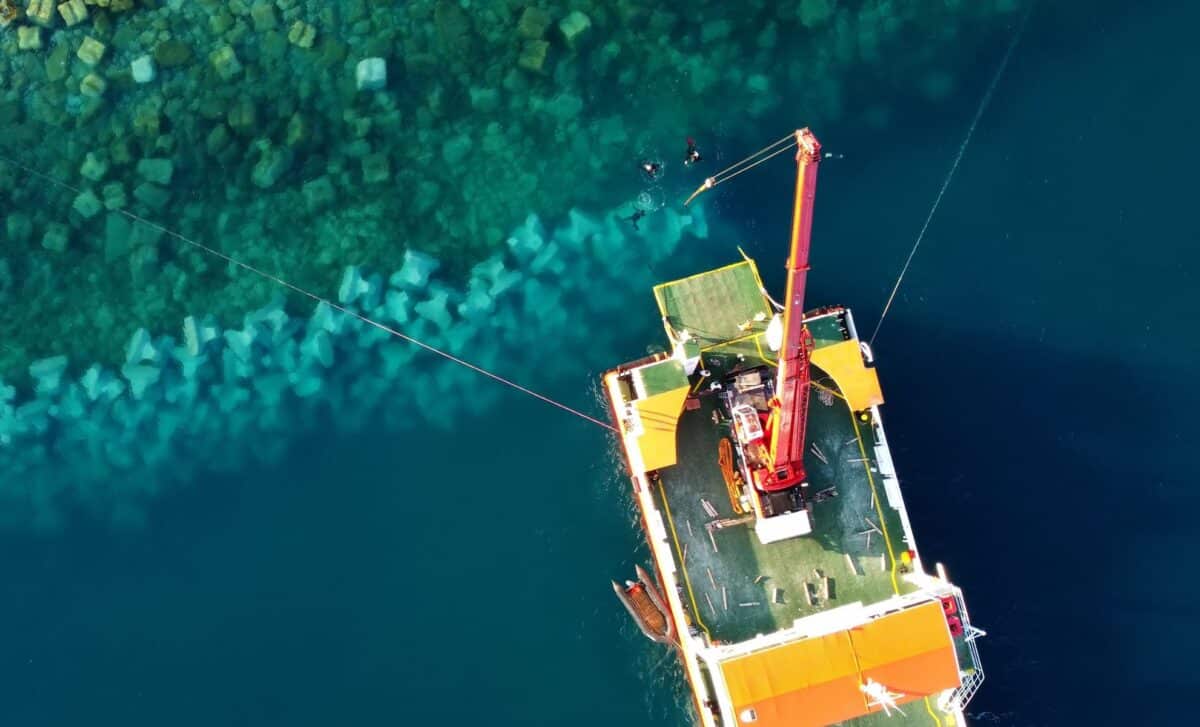
Alexandria’s legendary lighthouse, submerged for centuries, is emerging again thanks to recent underwater discoveries. Divers recovered 22 massive stone blocks from the Mediterranean, remnants of a lighthouse built around 280 BC during Ptolemy II’s reign. This engineering marvel, one of the Seven Wonders of the Ancient World, guided sailors for over a millennium until it succumbed to earthquakes in the 14th century, collapsing and sinking into the sea.
Standing over 100 meters tall, its flame could be seen from 50 kilometers away, aided by a mirror that focused light across the ocean. Recent archaeological efforts have begun to unveil more about its design and construction through the PHAROS project, which aims to digitally reconstruct the lighthouse. By examining these new blocks—some weighing up to 80 tons—researchers plan to create a virtual model to explore how the lighthouse functioned and instigated its demise.
Alexandria, once a thriving center of trade and learning, regards the lighthouse as a key landmark symbolizing its historical significance. Ongoing restoration efforts are enhancing our understanding of this ancient structure, including investigations into its light production and design evolutions over time.
Source link
