



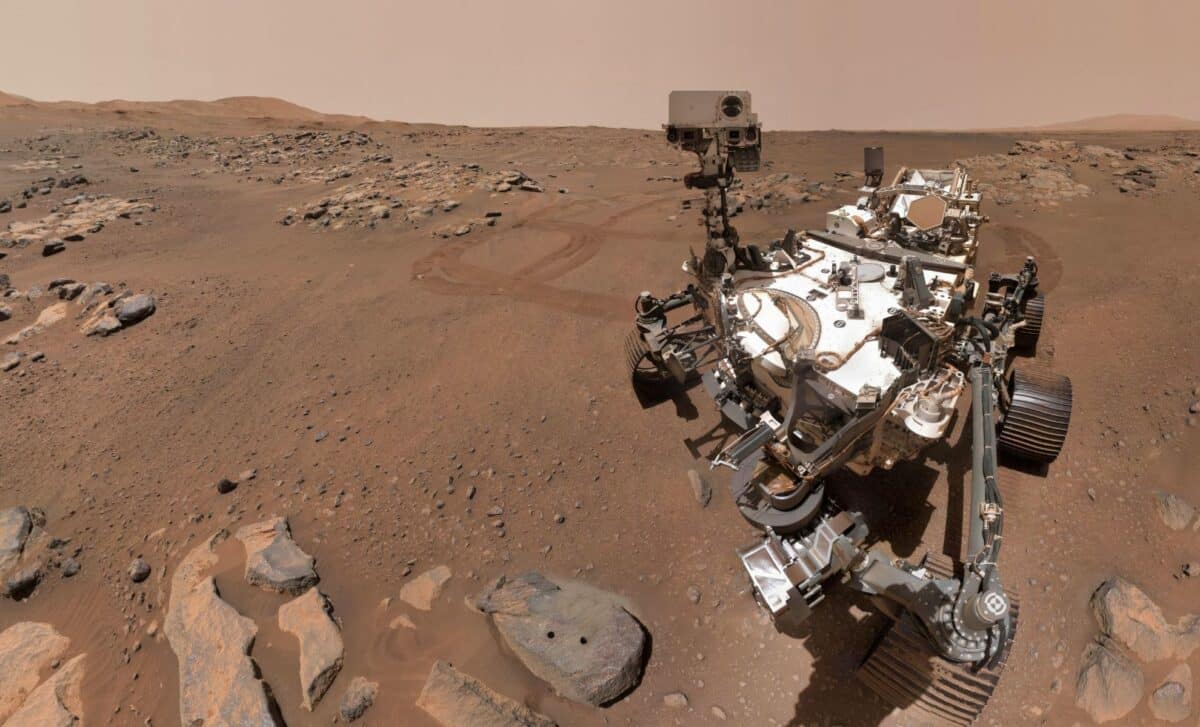
A study conducted by Professor William Romoser of Ohio University has suggested the possibility of insect and reptile-like life forms on Mars, based on analysis of images from NASA’s Curiosity rover. Traditionally, scientists have searched for signs of life on Mars through chemical signatures and microbial fossils, but Romoser’s findings introduce the idea that Mars could host more complex organisms.
His research identified features resembling those of terrestrial arthropods and reptiles in Curiosity images. Romoser claims to have observed several insect-like creatures, termed “bees,” displaying traits such as segmented bodies, wings, and acrobatic flight, similar to Earth insects. He noted a mosaic of anatomical features among different specimens and mentioned that some appeared to nest in caves or burrows.
In addition to the insect-like creatures, Romoser found what he interprets as a reptile-like fossil, resembling an Eastern kingsnake. This specimen exhibited anatomical characteristics consistent with terrestrial reptiles, such as a defined head and pronounced mouth, and suggested that these creatures might prey on the insect-like forms.
Romoser’s work could pave the way for new fields within astrobiology, like “astroentomology” and “astroherpetology,” igniting interest and skepticism in the scientific community. His findings may prompt further debate regarding the potential for more complex life on Mars beyond microbial forms.
Source link
