



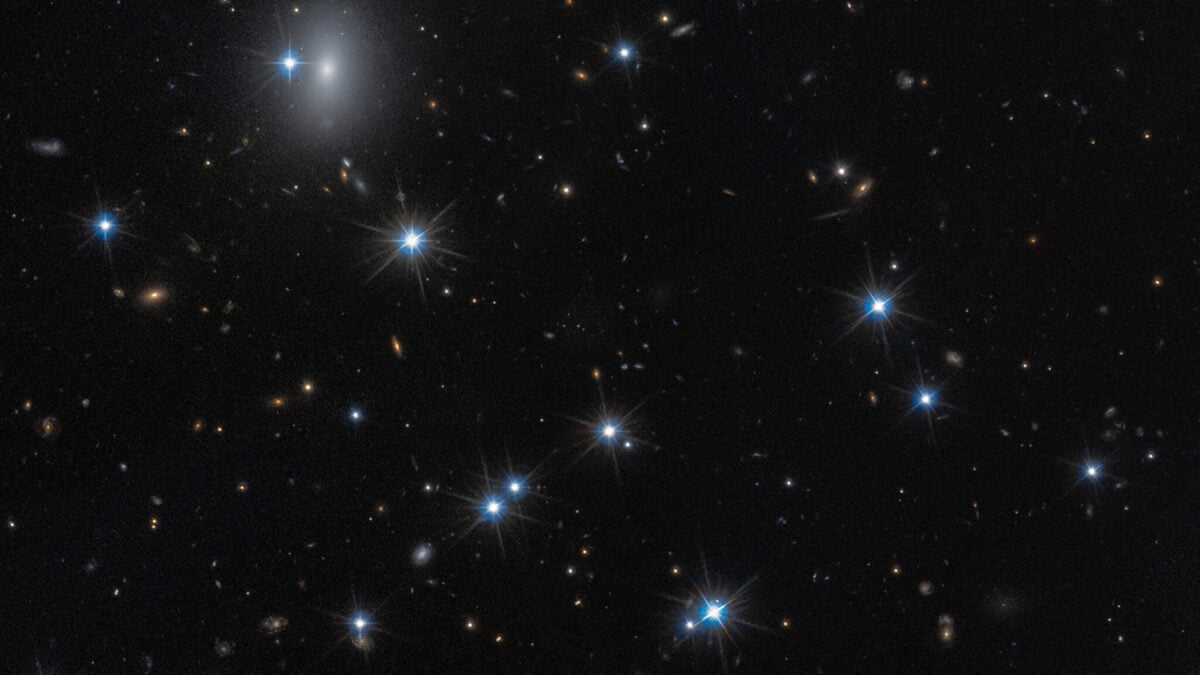
The article discusses dark matter, which constitutes 85% of the universe’s mass but does not interact with light, making it invisible. Recently, astronomers focused on “dark galaxies,” particularly CDG-2, a candidate identified within the Perseus galaxy cluster. CDG-2 is speculated to be rich in dark matter, potentially one of the most extreme examples yet found.
NASA released a high-resolution image of CDG-2, which was detected through the gravitational influence of dark matter on surrounding objects. Despite its low brightness, researchers believe CDG-2 consists mainly of dark matter, with only 16% of its mass coming from visible material, primarily globular clusters.
This discovery is significant as it may help explicate unresolved mysteries about galaxies and the universe’s structure. Although direct detection of dark matter remains elusive, its influence is essential for existing scientific models. Ultimately, CDG-2 offers a unique opportunity to explore the implications of dark matter in cosmological studies.
Source link
