



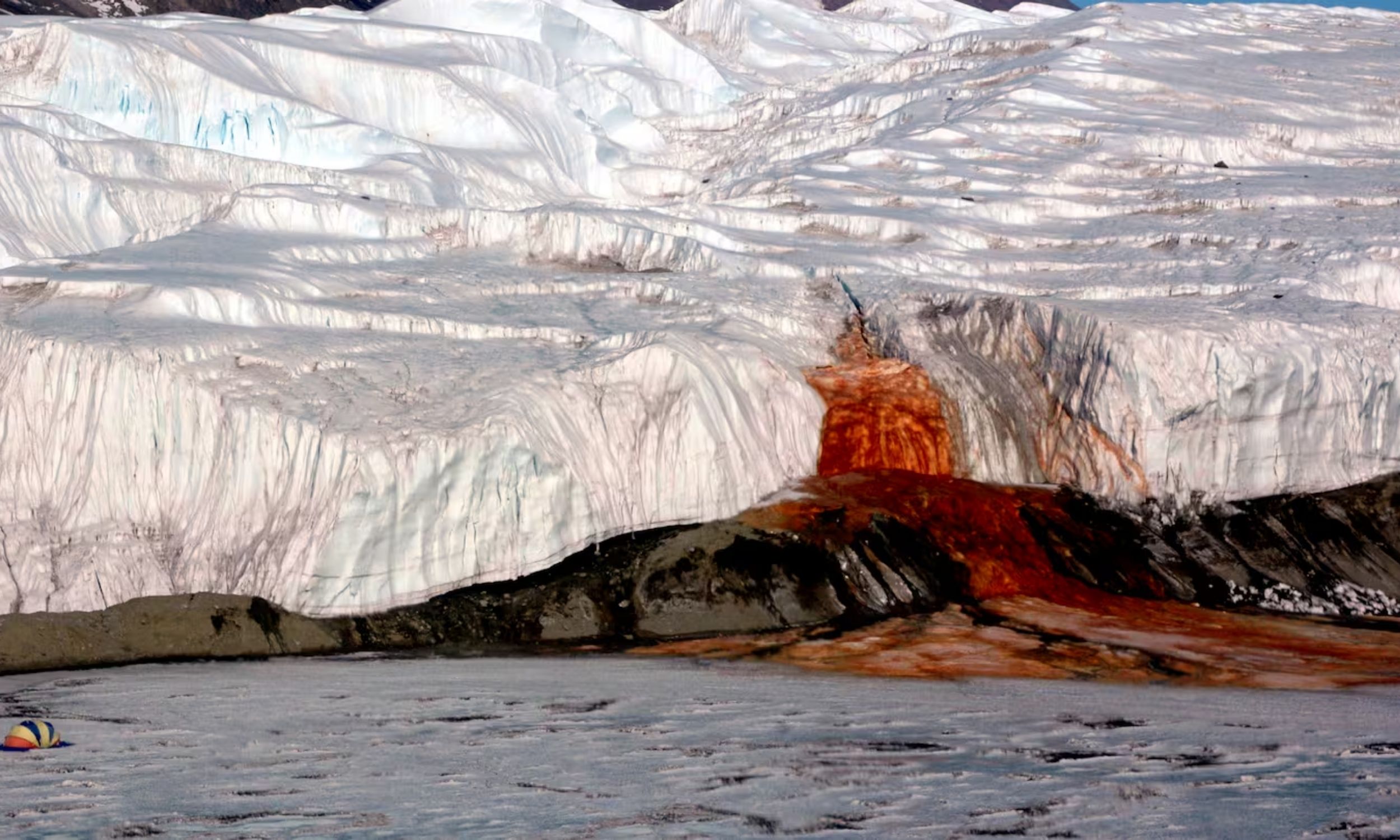
Scientists have linked the sudden eruption of rust-red water at Blood Falls in Antarctica to a measurable decline in the overlying Taylor Glacier. This phenomenon indicates that the red stream is a visible sign of shifting pressures and subterranean water movement rather than just a surface stain.
In September 2018, researchers recorded the glacier’s descent, noting that the changes were matched by a decline in pressure. Observations showed the glacier surface sinking and recovering, suggesting a pulse of drainage beneath. The findings emphasize the pressure buildup from heavy ice trapping salt water, leading to episodic discharges.
The saline water, which remains liquid in extreme cold, is formed from buried salt deposits and can escape through cracks during ice movement. The reddish hue of the water is due to iron oxidizing upon exposure to air. Daily camera recordings noted the staining’s expansion, with temperature sensors also showing related changes.
Significantly, the glacier’s surface dropped by 0.6 inches, correlating with a 10% reduction in its movement rate due to the draining of pressure. The study indicates that subglacial water release events might influence the glacier’s dynamics, suggesting that future research could further examine the relationship between warming trends and subglacial activity. The study is detailed in Antarctic Science.
