



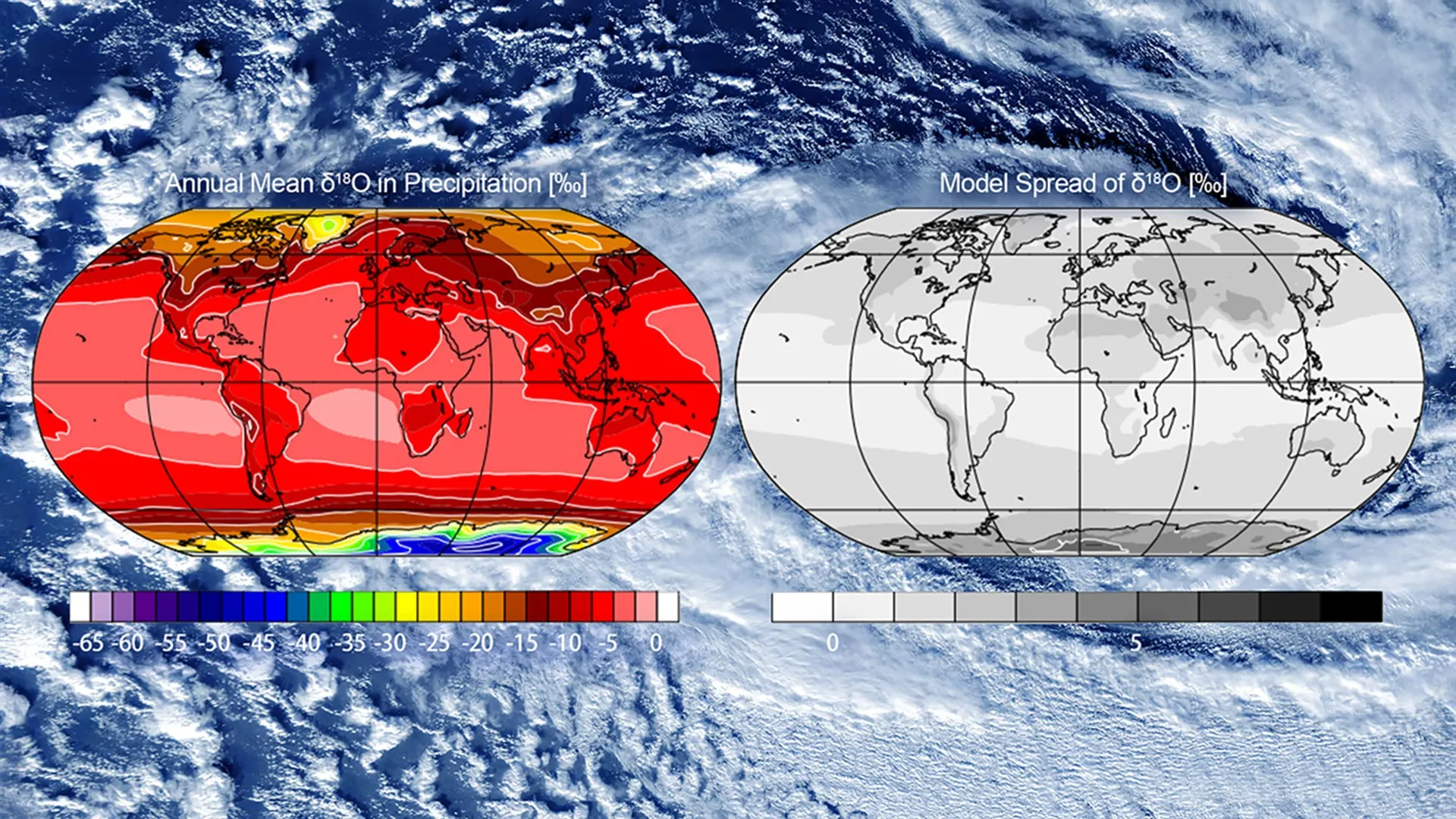
Scientists have developed a method to trace the global journey of individual water droplets by examining the isotopes of hydrogen and oxygen. As water evaporates and moves through the atmosphere, the ratios of these isotopes change, acting as unique fingerprints. This isotopic data, when combined with hydrological models, improves understanding of extreme weather events and climate change impacts.
In a recent study published in the Journal of Geophysical Research: Atmospheres, researchers at the University of Tokyo used an ensemble method, integrating eight isotope-enabled climate models over a 45-year period from 1979 to 2023. This allowed for a comparison of how different models represent water cycle physics against real-world climate data. The ensemble approach is more effective in capturing global precipitation and isotopic patterns than individual models.
The study highlights that changes in water isotopes provide insights into moisture transport and atmospheric circulation, connected to major climatic phenomena like El Niño and the North Atlantic Oscillation. The findings demonstrate an overall increase in atmospheric water vapor linked to rising global temperatures.
This research marks the first integration of multiple isotopes into a unified climate modeling framework, yielding results closely aligned with observational data. It enhances understanding of past climate changes and aids predictions about the water cycle and associated weather patterns amid ongoing global warming.
