



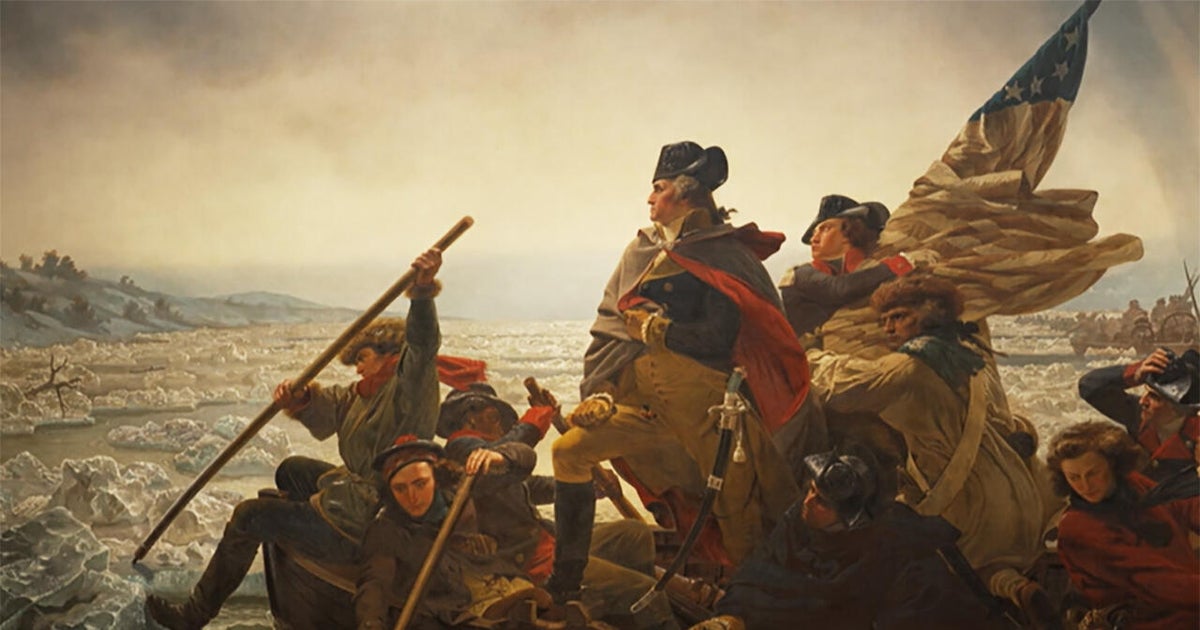
The article explores the significance of ice and cold weather during George Washington’s military strategy, specifically noting how ice on the Delaware River prevented enemy crossings, inadvertently providing Washington’s army with a tactical advantage. This led to a surprise victory at Trenton, crucial for the American Revolutionary War.
It then shifts focus to modern climate change, highlighting data suggesting that winter temperatures in the Philadelphia area have increased by 5.5 degrees since 1970. Climate scientists explain that ice cores, which capture ancient air bubbles, reveal historical levels of carbon dioxide that rose significantly after the Industrial Revolution due to fossil fuel usage.
The piece concludes by reflecting on how both the American story and climate change are intertwined, emphasizing the dramatic changes in the environment since Washington’s time, hinting at how future generations will experience even more drastic shifts.
Source link
