



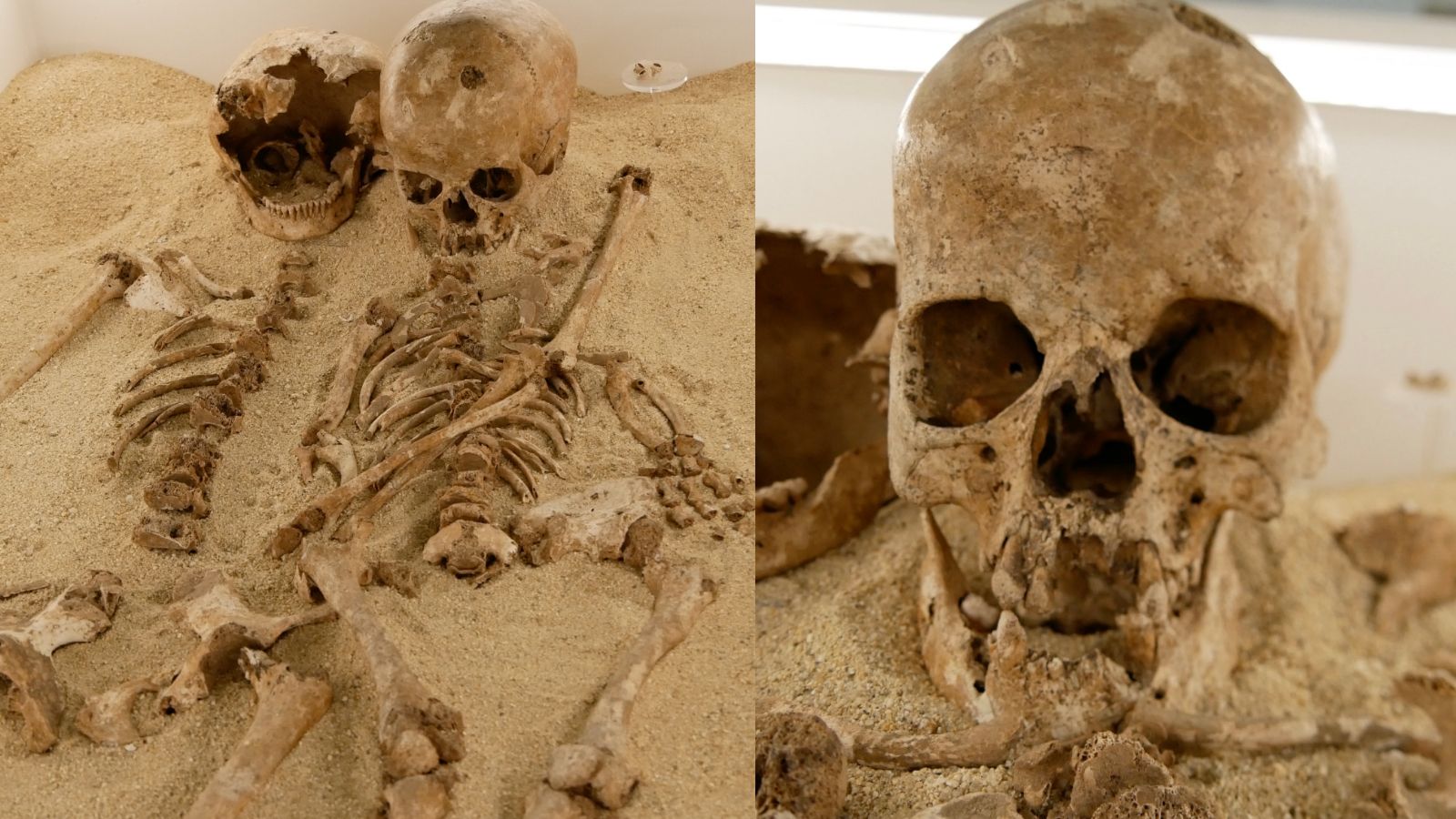
A recent study has identified a Stone Age teenage girl, named “Romito 2,” who lived 12,000 years ago in an Italian cave and suffered from a rare genetic disorder called acrochromosomal dysplasia, Maroteau type (AMDM), leading to significantly short limbs. This marks the earliest DNA-confirmed diagnosis of a genetic disease in anatomically modern humans.
Researchers examined her skeleton and nearby remains, discovering that Romito 2 was about 3 feet 7 inches tall and was buried with a first-degree relative, likely her mother or sister, Romito 1. Both exhibited reduced height: Romito 1 stood at 4 feet 9 inches. DNA tests revealed that Romito 1 had one abnormal copy of the gene NPR2, whereas Romito 2 had two, resulting in more severe dwarfism.
Despite their challenges, including limitations in mobility, evidence suggests Romito 2 received care from her family group within a community that likely faced communal living conditions. The exact causes of their deaths remain uncertain as no signs of trauma were found. This discovery not only sheds light on the genetics of ancient humans but also emphasizes the social structures that may have supported individuals with disabilities in prehistoric times.
Source link
