



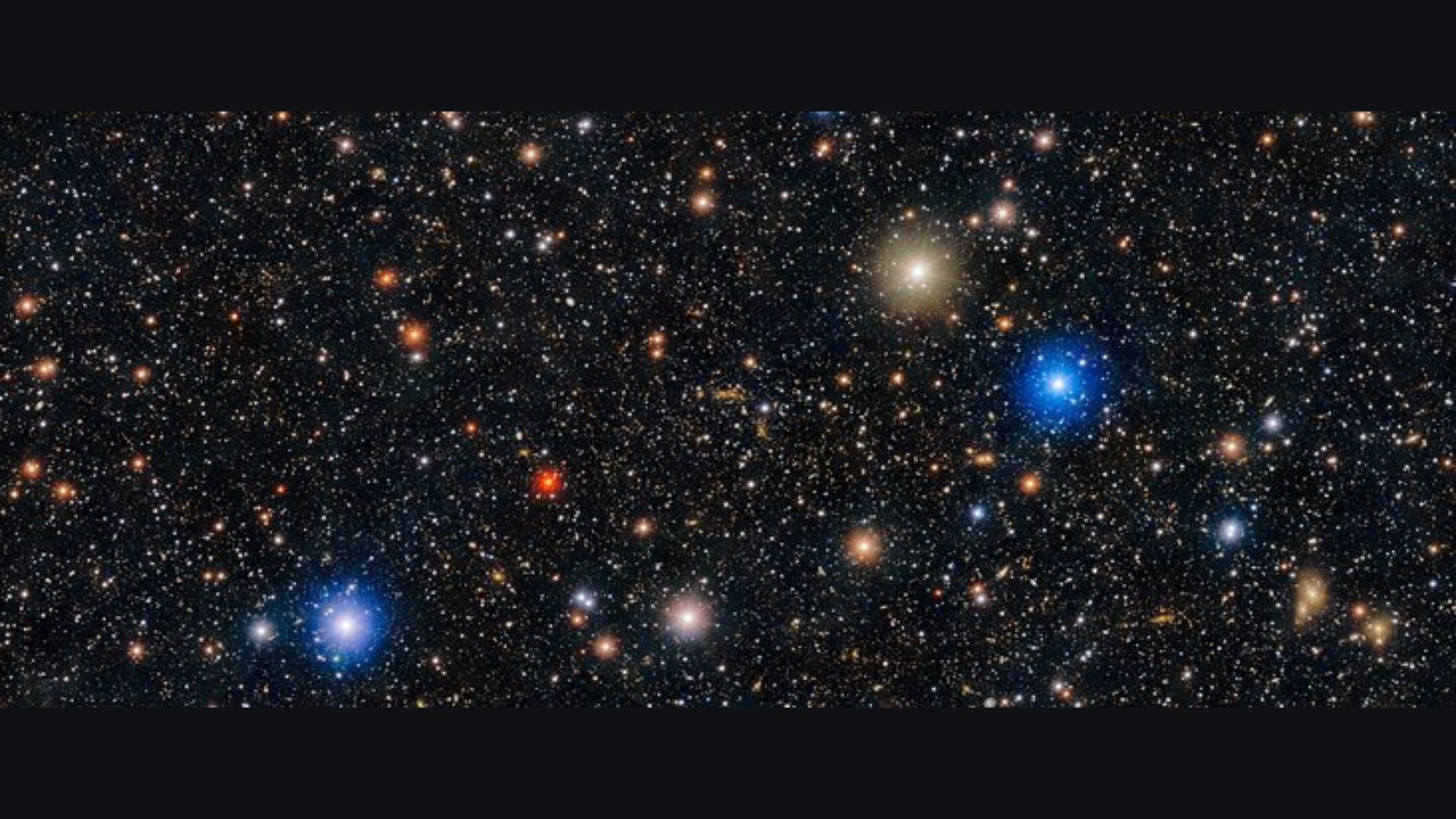
A six-year study involving 669 million galaxies has examined dark energy, the force driving the universe’s accelerating expansion. Conducted by the Dark Energy Survey (DES) using the Victor M. Blanco telescope in Chile, this research integrates multiple data types to investigate the universe’s expansion. Notably, it reveals that two leading cosmological theories are equally compatible with the latest findings, although neither fully explains the observed matter distribution in the universe.
The DES analysis imposes stricter constraints on cosmological models, improving upon previous studies. Among the methods used were Type Ia supernovae measurements and weak gravitational lensing, which assist in understanding cosmic distances and distortions.
The data aligns closely with the standard cosmological model, which posits a constant dark energy density, though an alternative model with changing density is also compatible. Despite the good fit, discrepancies in galaxy clustering patterns prompt continued research. Future endeavors will take advantage of the upcoming Vera C. Rubin Observatory to deepen insights into dark energy, promising further discoveries in gravitational dynamics and cosmic structure.
The study underscores the importance of long-term research investments and collaborative analysis in unraveling the universe’s mysteries.
Source link
