



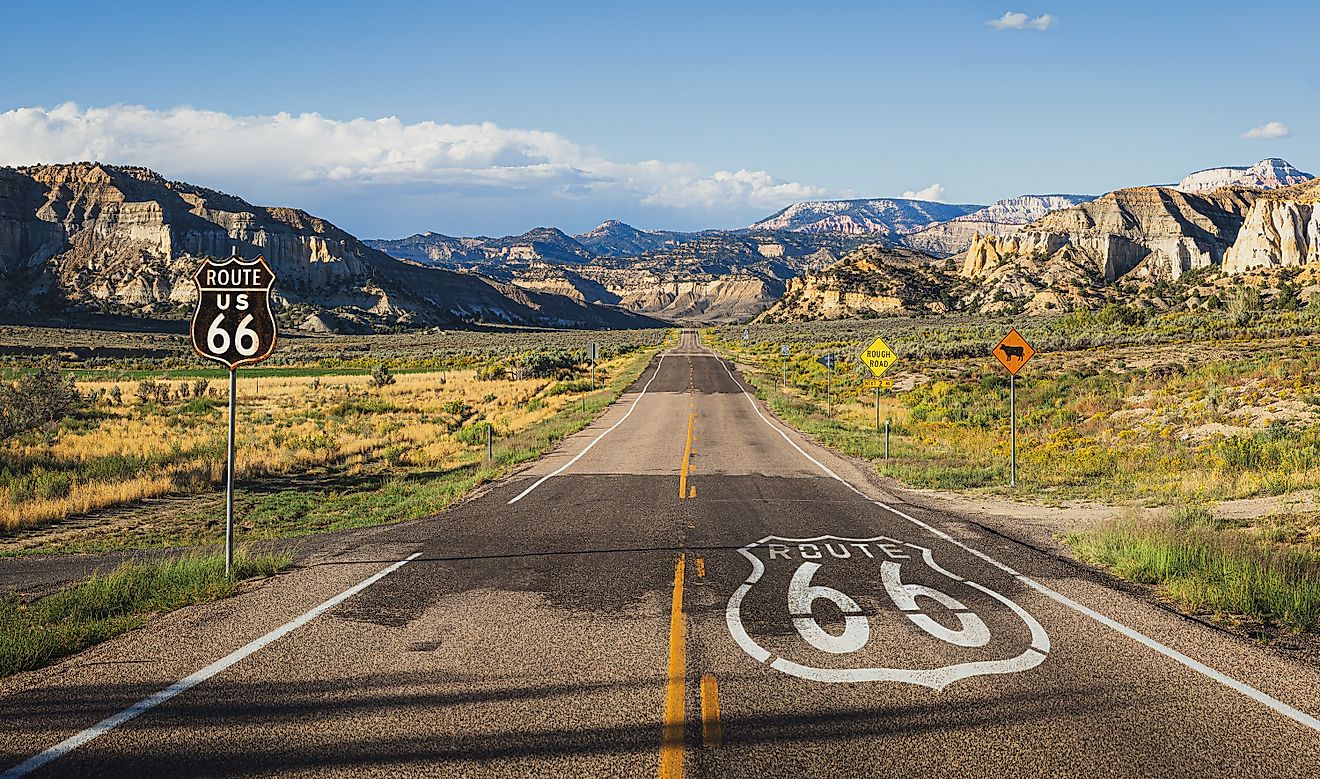
Route 66, established in 1926, spans about 2,500 miles from Chicago, Illinois, to Santa Monica, California, and has become a cultural icon and tourist destination. Originally a vital transportation route, it gained popularity during the Great Depression and served as a symbol of American freedom post-World War II, featuring motels, diners, and attractions.
Despite its decline with the rise of interstate highways, Route 66 remains a symbol of American history and culture, with various restoration projects keeping its spirit alive. The article highlights key attractions along the route:
-
Chicago, IL: The route’s eastern terminus, offering a rich cultural backdrop and significant historical sites.
-
Route 66 State Park, MO: A preserved section of the highway with walking paths and exhibits about the road’s history.
-
Route 66 Museum, Clinton, OK: A dedicated place showcasing the highway’s impact on culture and community.
-
Cadillac Ranch, TX: A public art installation featuring buried Cadillacs, inviting visitors to express their creativity through spray painting.
-
66 Diner, Albuquerque, NM: An authentic mid-century diner preserving the nostalgic feel of 1950s Americana.
-
Wigwam Motel, Holbrook, AZ: Unique accommodation in tepee-shaped rooms, reflecting the vintage road trip experience.
- Santa Monica Pier, CA: The route’s western end, offering entertainment and scenic ocean views, marking the completion of the journey.
Overall, Route 66 offers diverse experiences, making it a nostalgic road trip filled with history and iconic landmarks.
