



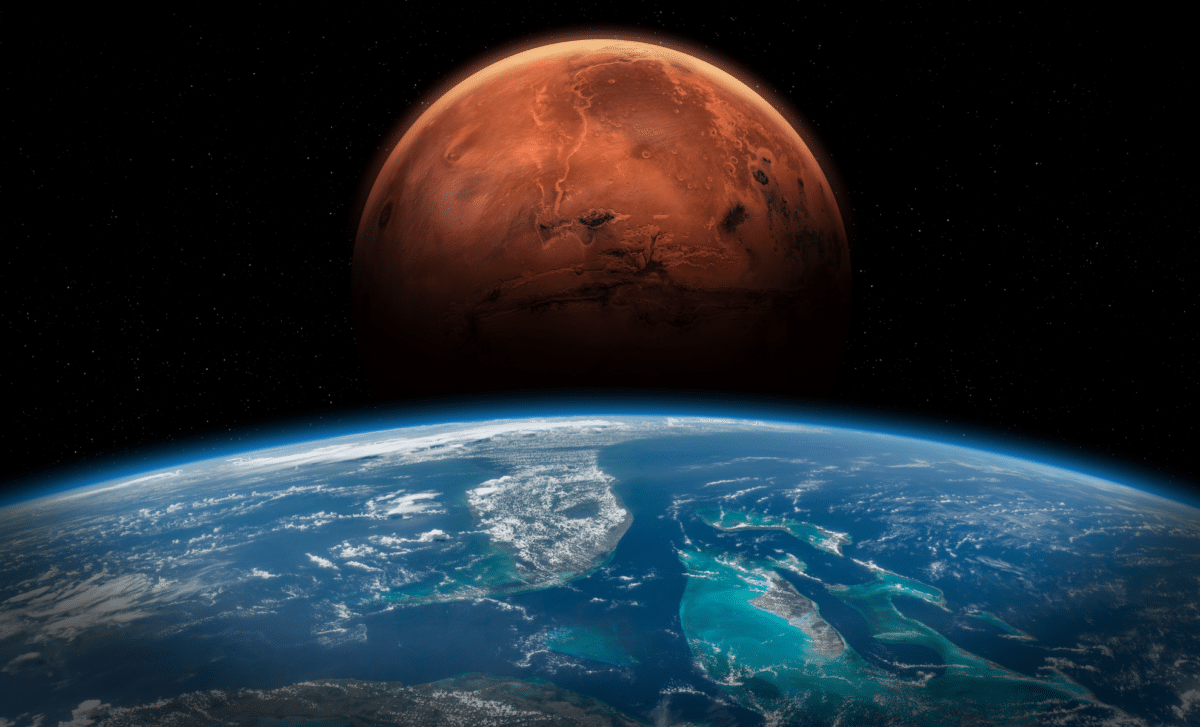
A recent study in Pacific Astronomical Society Publications suggests that Mars has a larger role in Earth’s climate and evolution than previously thought. The research, led by Stephen Cain from the University of California, Riverside, reveals that Mars’ gravitational influence contributes significantly to Earth’s climate stability, affecting its axial tilt and enabling essential cycles like ice ages and ocean currents.
Using orbital simulations, Cain’s team discovered that Mars acts as a stabilizing force on Earth’s tilt, preventing drastic shifts that could lead to catastrophic environmental changes. The study highlights the interconnectedness of our solar system, emphasizing that even distant planets like Mars can influence life on Earth.
Furthermore, the findings have implications for the search for habitable exoplanets, suggesting that outer planets can play a crucial role in maintaining climate stability for Earth-like planets. This underscores the importance of considering entire planetary systems when studying potential habitability, revealing how much Earth’s stability—and possibly life itself—depends on the presence of Mars.
