



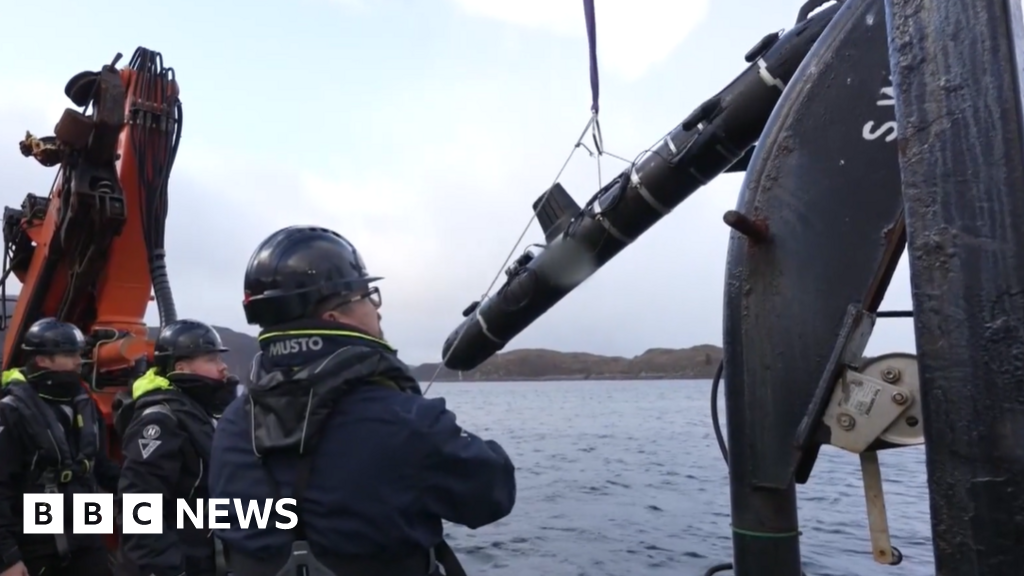
The article discusses the deployment of the SG-1 Fathom, a new underwater glider developed by German defense company Hellsing and being trialed by the Royal Navy. This autonomous glider patrols the ocean floor, using advanced sensors to monitor for potential threats, particularly from Russian submarines and spy ships suspected of mapping critical British undersea infrastructure.
The UK government, responding to a 30% increase in Russian submarine activity in British waters, is focusing efforts to protect vital undersea cables and pipelines. The Ministry of Defense’s Atlantic Bastion project aims to create a network of drones, ships, and aircraft for this purpose. The initiative follows concerns raised by Parliament regarding the nation’s preparedness to defend against such threats.
Defense Secretary John Healey emphasized the importance of investing in new technologies to counter Russian military advancements, citing the need for immediate action due to the evolving threat landscape. However, experts express skepticism, arguing that while strategies appear sound, the Royal Navy lacks consistent operational capability and has been slow to address the growing challenges posed by Russia.
In response to the UK’s actions, Russia claims the UK is being provocative, insisting that efforts like the Lunna House agreement to track Russian naval activities could exacerbate tensions. Despite differing perspectives, UK defense officials acknowledge the importance of addressing the submarine threat effectively.
Source link
