



This week’s notable science news highlights several groundbreaking discoveries:
-
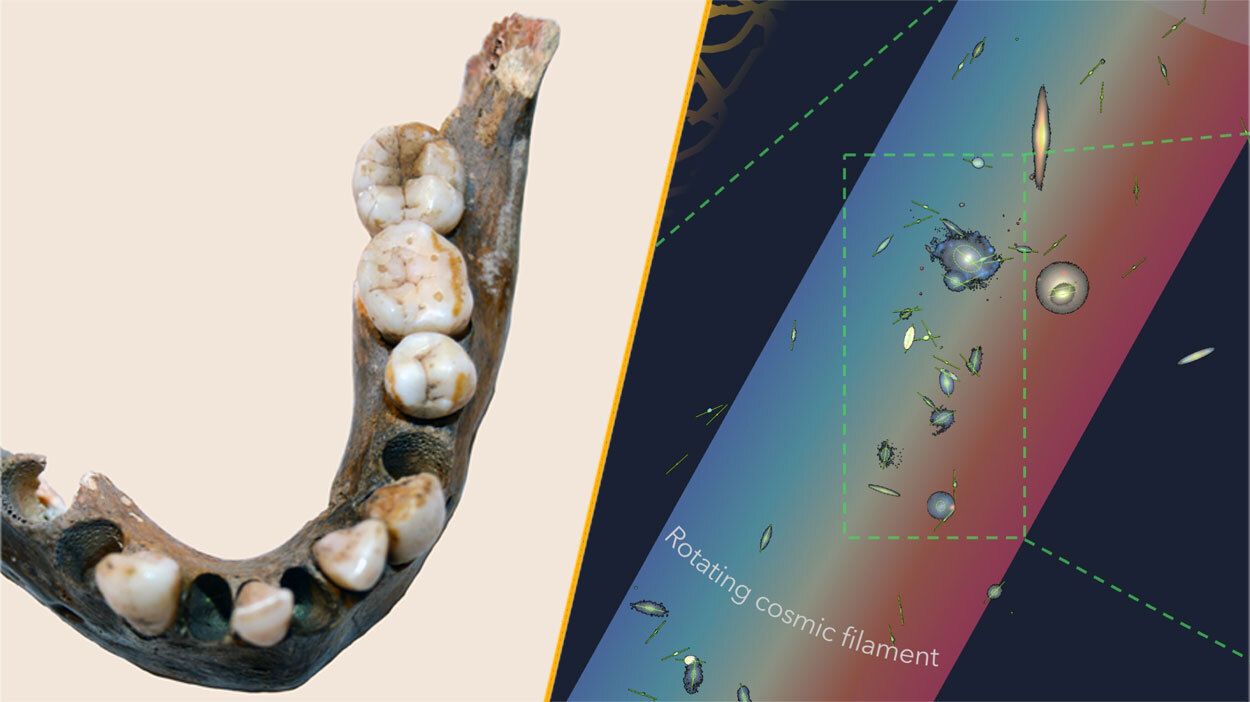
Cosmic Discovery: Astronomers found the largest rotating object in the universe—a giant filament of galaxies located 140 million light years away, spinning at about 68 miles per second.
-
Genetic Insights: In southern Africa, researchers studied human remains up to 10,000 years old, revealing drastic genetic diversity. The findings indicate these populations were isolated for 100,000 years, differing significantly from modern humans.
-
Archaeological Puzzles: A giant skull pit discovered in China contained predominantly male skulls, differing from typical human sacrifice patterns. Meanwhile, an ancient Greek tomb revealed a woman with an upside-down crown, raising questions among archaeologists.
-
Environmental Concerns: China’s large-scale reforestation project, part of the Great Wall initiative, has altered rainfall and evaporation patterns, leading to reduced water levels in populated areas.
-
Comet Insights: Comet 3I/ATLAS, an interstellar visitor, was observed exhibiting spiral jets, suggesting cryovolcanic activity. As it approaches the sun, its brightness has increased, indicating sublimation of ice.
-
Water Extraction Tech: MIT engineers developed a method to extract drinkable water from air using sound waves, increasing efficiency significantly compared to traditional methods.
-
Helium Discovery: New findings of carbon-free helium reservoirs could address the looming helium shortage and reduce carbon emissions associated with extraction.
- Dinosaur Footprints: Bolivia’s Carreras Pampas has been identified as a significant site containing over 18,000 fossilized dinosaur footprints, marking it as one of the premier dinosaur footprint locales.
This report showcases advancements in astronomy, genetics, archaeology, environmental science, and technology, reflecting the dynamic nature of current scientific exploration.
