



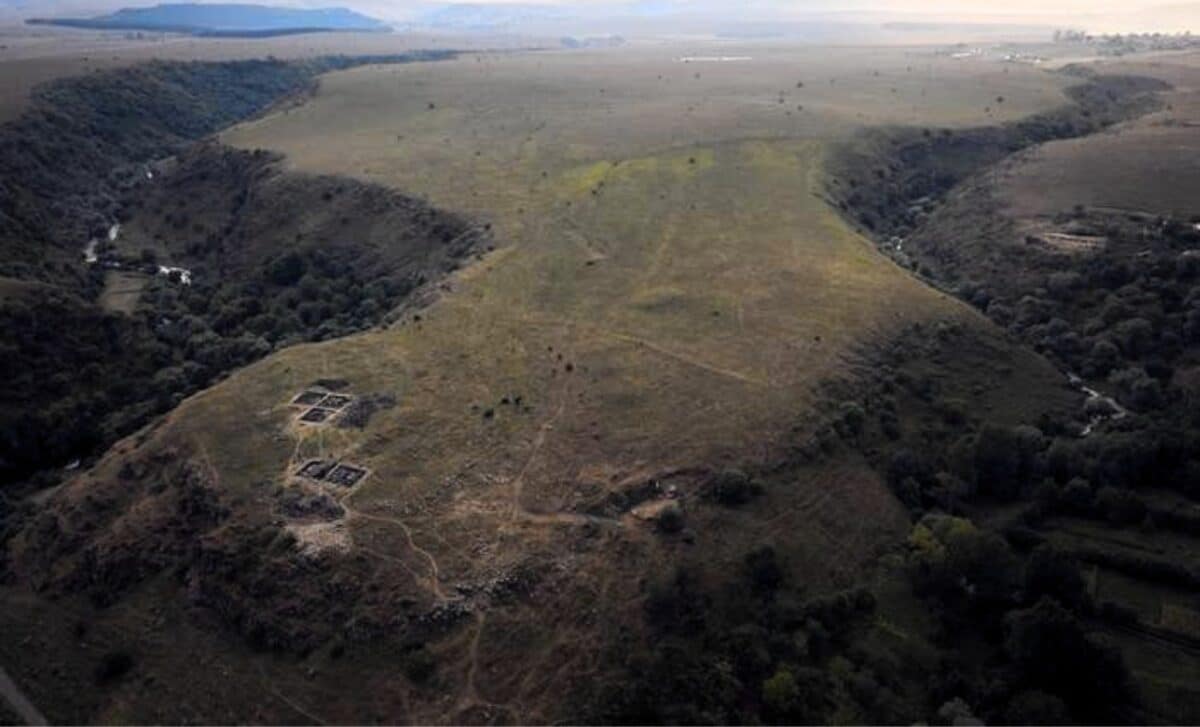
In southern Georgia, the ancient site of Domanicis Gora, a stone wall fortress over 3,000 years old, has revealed itself to be significantly larger than previously thought. Initially believed to be a 1.5-hectare fortress, recent drone surveys found it spans around 80 hectares, with a kilometer-long protective rampart. Researchers from Cranfield University and the National Museum of Georgia used a drone to capture high-resolution images, which were analyzed alongside declassified Cold War satellite photos to distinguish ancient structures from modern agricultural features.
Excavations uncovered a complex landscape with a small inner fortress and a sprawling outer settlement characterized by numerous stone structures, possibly used for various purposes, including residences and animal enclosures. Despite extensive stone constructions, thin sediment layers and a lack of surface ceramics suggest that the outer settlement experienced low-intensity or intermittent occupation.
The researchers hypothesize that Domanicis Gora functioned as a base for nomadic pastoral groups, who occupied the site seasonally during migrations between lowland and highland areas. This blend of sedentary and nomadic lifestyles challenges traditional notions of urbanism, indicating that large settlements like Domanicis Gora may serve as communal hubs rather than densely populated cities. Ongoing excavations aim to further illuminate the site’s role in ancient social dynamics, including patterns of occupation and agricultural practices.
Source link
