



Antarctica, seemingly a vast white ice sheet, harbors significant geological activities beneath its surface, notably where ice interacts with rock, water, and sediment. A recent discovery by scientists revealed a substantial granite deposit hidden beneath the Pine Island Glacier, reshaping understanding of the continent’s geology and ice dynamics.
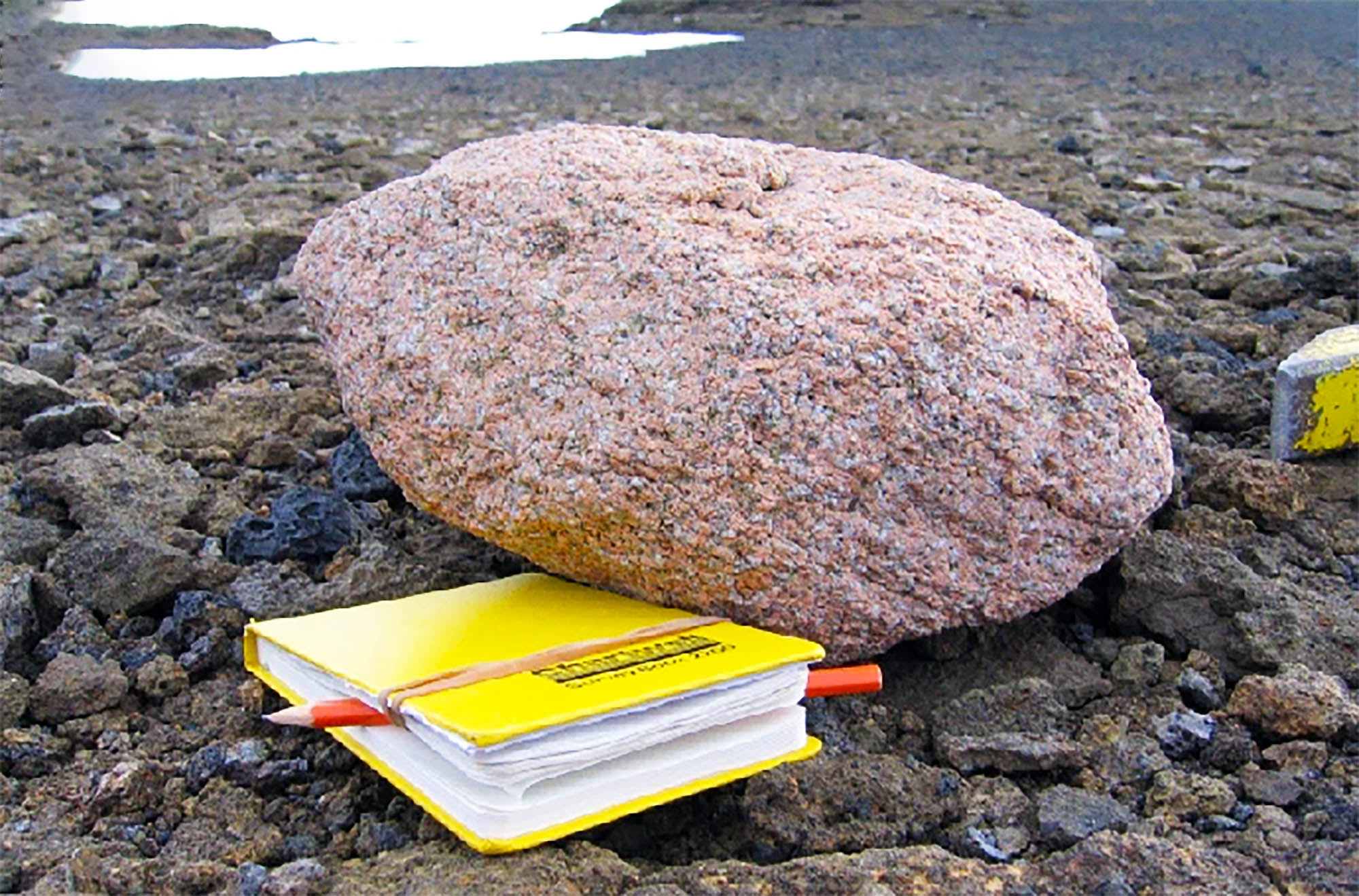
This investigation began with mysterious pink granite boulders found among dark volcanic rocks in the Hudson Mountains. A team from the British Antarctic Survey (BAS) studied the rocks’ radioactive decay, confirming they formed around 175 million years ago but were not originally from the area. Using gravity sensors, researchers identified a granite deposit roughly 100 kilometers wide and 7 kilometers thick beneath the glacier, explaining the origin of these pink rocks.
These granite formations are crucial as they influence glacier movement and melting rates. Pine Island Glacier, one of Antarctica’s fastest-melting areas, has historical significance, with the granite pieces marking its past flow patterns. Scientists are now able to model future glacier behavior and potential sea-level rise impact more accurately.
The study extends to the long-term climatic changes recorded in these rocks, underscoring their importance in predicting the future of the West Antarctic Ice Sheet and its effects on global sea levels. As researchers combine geological data with advanced geophysical techniques, they enhance their understanding of this remote environment’s history and its implications for our planet’s future.
Source link
