



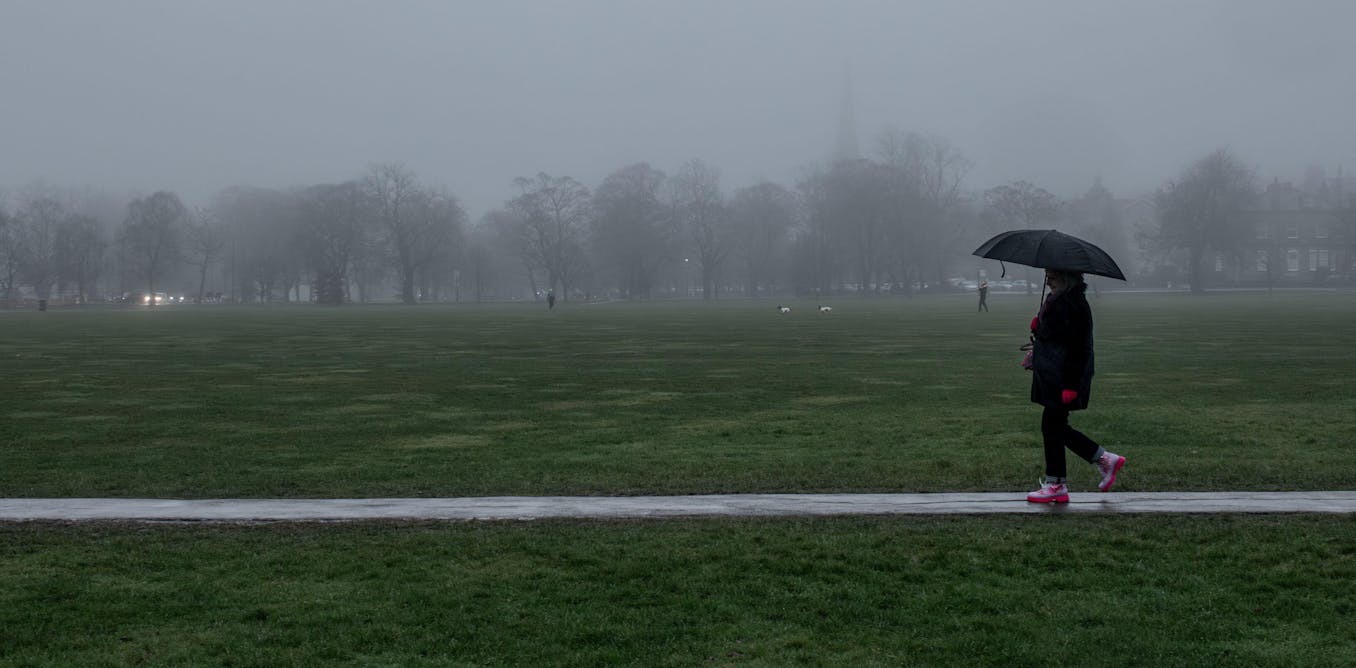
The UK is experiencing an unprecedented period of rainfall, with some areas, like Reading, recording 41 consecutive days of rain, the highest since records began in 1908. This extreme weather reflects the impact of climate change, which is making the country’s already variable weather patterns significantly more extreme.
In Reading, 141 mm of rain has fallen over the past month, more than double the 30-year average of 58 mm for the same period. Such persistent heavy rain is becoming more common as climate scientists warn of increasingly wet winters in the UK.
The connection between climate change and the UK’s wet winters lies in atmospheric physics: warmer air holds more moisture, leading to heavier downpours. Additionally, climate change is disrupting ocean and atmospheric patterns essential for the UK’s weather. The jet stream’s current southward position is directing wet, windy systems toward the UK, while preventing trends of dry weather that typically circulate.
The changing climate complicates the interplay of factors affecting the jet stream, as differences in temperature between the poles and equator affect its behavior, sometimes causing weather systems to stall and resulting in sustained rainfall.
These extreme fluctuations between drought and floods create significant challenges for water management, agriculture, and infrastructure. Planning for these climate extremes is crucial for preparedness, resilience, and adaptation to future conditions in the UK.
Source link
