



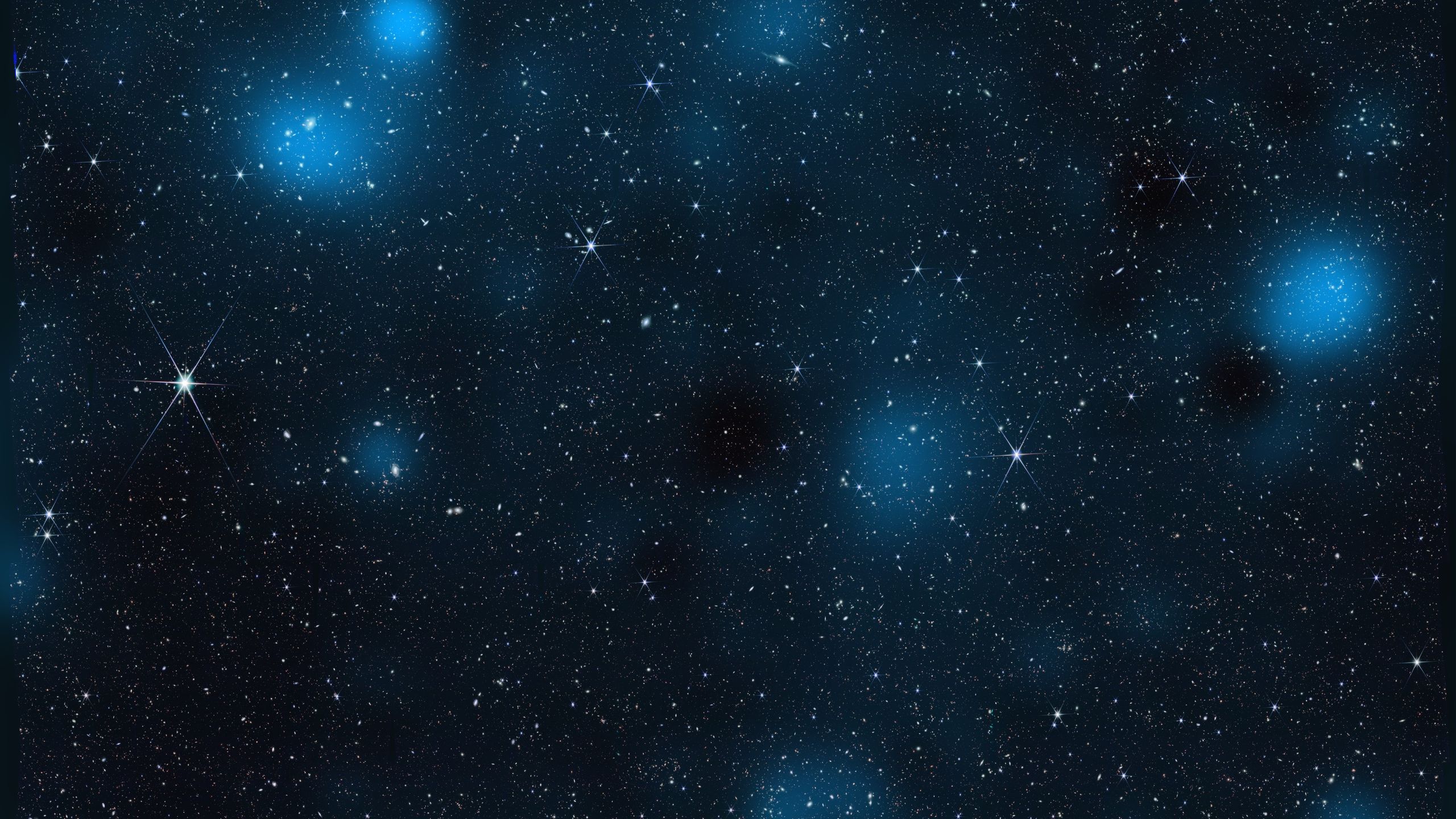
Astronomers utilizing the James Webb Space Telescope (JWST) have created the most extensive map of the universe’s dark matter to date, enhancing our understanding of this elusive substance. Dark matter, which does not interact with light, can be detected through its gravitational effects on ordinary matter. The new study, published in Nature Astronomy, mapped a region in the constellation Sextant over 255 hours, identifying around 800,000 galaxies—ten times more than previous ground observations and nearly double the findings of the Hubble Space Telescope.
Researchers graphically represented the invisible dark matter’s mass and its distortion of space, providing a clearer image than before. Diana Scognamiglio, an astrophysicist, noted that this detailed mapping reveals the "invisible scaffolding of the universe." The research suggests that dark matter played a critical role in the universe’s evolution, helping clump ordinary matter to form stars and galaxies, essential for life’s emergence.
Looking ahead, Scognamiglio’s team plans to continue their dark matter mapping efforts using NASA’s upcoming Nancy Grace Roman Space Telescope, which will survey a significantly larger area, although with less detail than JWST.
