



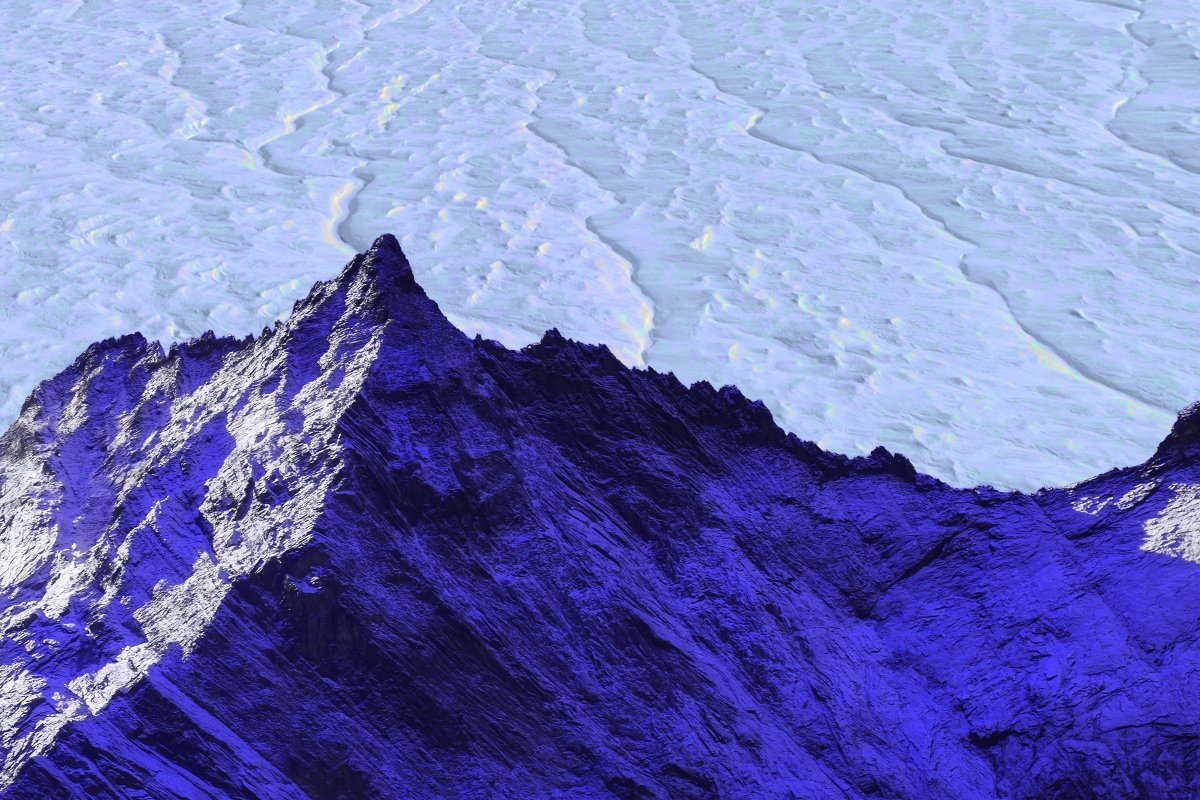
Researchers have created a new map of Antarctica’s underground landscape, revealing previously hidden hills, ridges, and mountain ranges beneath its ice. This study, published in Science, suggests a novel method for studying Antarctic ice and predicting its future in the face of climate change.
Lead author Helen Ockenden explained that previous radar missions offered only a fragmented view of the subsurface, akin to having a grainy film camera. The new approach combines optical satellite images and radar data with ice flow models, unveiling a diverse topography, including alpine valleys and extensive waterways.
Though this method has limitations—failing to capture features smaller than a few meters—it provides valuable insights into rough bedrock areas for further study. Understanding these underground features is crucial as they impact the stability of ice reserves, particularly concerning the Thwaites Glacier, which poses a significant sea-level rise threat due to warming ocean waters.
Overall, the findings enhance our comprehension of Antarctica’s hidden landscape and potential climate impacts.
