



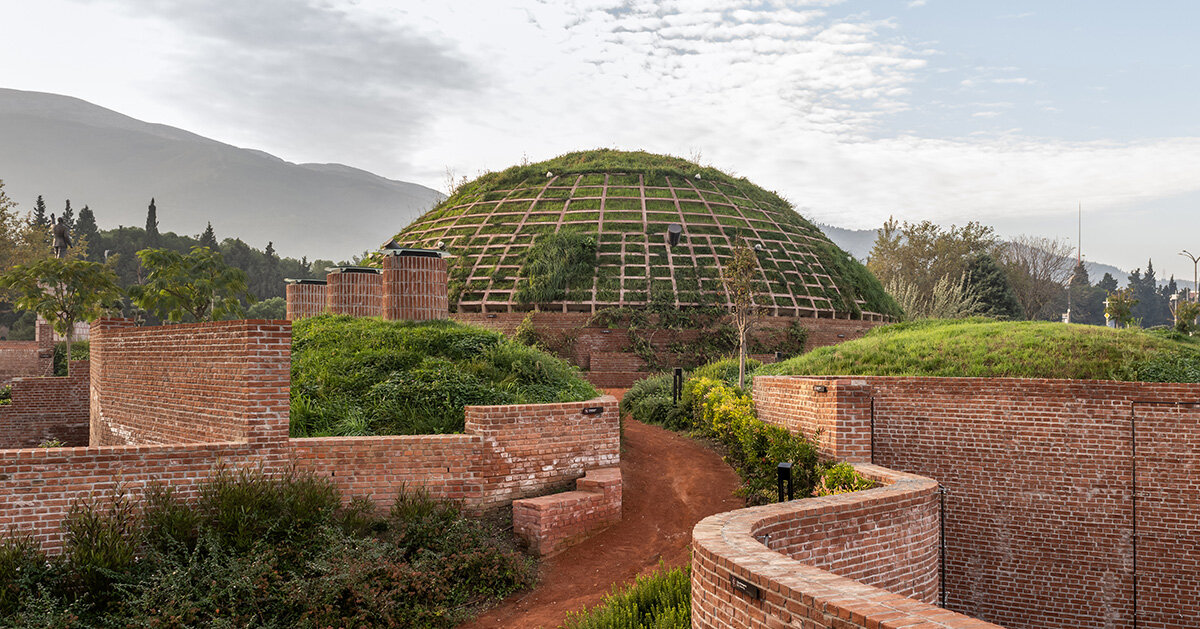
The Manisa Liberation Museum, designed by Jarin Architects in western Turkey, is an experiential space dedicated to the local civil resistance movement during 1918-1923. Covering 3,800 square meters, the museum integrates into its landscape with an earth-covered dome, brick structures, and a sunken courtyard, reflecting themes of occupation, destruction, and resilience.
Yalin Architectural Design emphasizes Manisa’s wartime experiences, showcasing the courage of ordinary civilians through 14 distinct exhibition chambers. The narrative unfolds from uncertainty to cautious hope, using spatial contrasts to engage visitors emotionally. Key architectural features include an amorphous entrance hall reminiscent of a whale’s belly and a series of interconnected rooms that convey the city’s historical journey.
The upper section of the museum serves as a public park, allowing daily interactions with historical memory. By employing various architectural and narrative strategies, the museum aims to inform visitors about the trauma and recovery of Manisa, transforming architecture into an active storyteller rather than a mere backdrop.
Source link
