



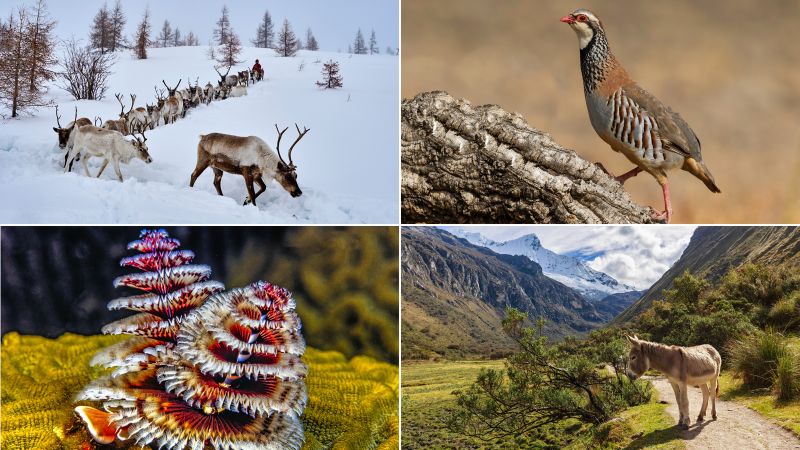
The article discusses the impact of climate change on various animals traditionally associated with holiday celebrations in the U.S. It highlights how rising temperatures are affecting species like reindeer, armadillos, Christmas tree worms, narwhals, red-footed partridges, and donkeys.
-
Reindeer: Despite their resilience during past warming periods, reindeer populations have declined by 40% globally in the last 30 years due to habitat loss and increased temperatures. They struggle to find cool habitats, with projections indicating a possible 58% decline by 2100. Interestingly, grazing by reindeer can help sequester carbon, potentially mitigating climate change.
-
Christmas Tree Worms: These colorful marine creatures have a symbiotic relationship with coral reefs, aiding in their health. Their populations could serve as indicators of coral stress, providing scientists insight into the health of marine ecosystems affected by warming oceans.
-
Armadillos: Historically confined to the Southwest, armadillos are expanding their range across the U.S. due to rising temperatures. Current data show sightings spreading as far north as Iowa, illustrating the species’ adaptation to warmer climates.
-
Narwhals: A researched sample from a royal Danish throne revealed that narwhals have low genetic diversity, making them vulnerable to the effects of climate change. Although they have survived with minimal diversity, the warming Arctic poses a significant risk to this species.
-
Red-footed Partridges: This bird species has faced a steep decline due to overfishing and habitat change, reducing their population by up to 45%. Unlike narwhals, they are less equipped to handle climate change and have low resilience due to diminished genetic diversity.
- Donkeys: In many areas, donkeys play a crucial role in helping humans adapt to climate change. They assist in transporting food and water during droughts and maintain ecosystem balance by consuming a variety of plants. Moreover, their skin produces chemicals that repel ticks, offering additional health benefits in an era of expanding tick populations.
Overall, the article emphasizes how climate change is affecting these animals directly and indirectly, impacting both ecosystems and human traditions.
