



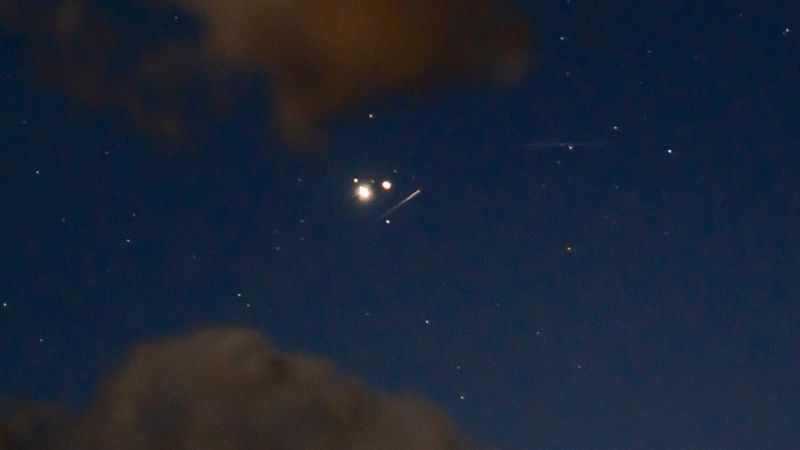
The Urids meteor shower, the final celestial event of the year, will peak from Sunday night into early Monday morning. Sky watchers can expect to see five to ten meteors per hour during this time. This meteor shower coincides with the winter solstice, providing dark skies ideal for viewing due to the thin crescent moon.
Visible only in the northern hemisphere, the meteors originate from the constellation Taurus and are linked to comet 8P/Tuttle, which leaves behind particles as it orbits the sun. This year, the shower’s activity may be enhanced due to Earth passing through a specific debris trail from the comet.
Although often overshadowed by the more spectacular Geminid meteor shower, the Urids are worth watching if one can find dark skies away from city lights. Observers are advised to focus on the northern half of the sky for the best chances of viewing.
Looking ahead, January will start with the Wolf Moon peaking on January 3rd, coinciding with the Shibungid meteor shower, known for bright, slow-moving fireballs, though the full moon’s brightness may dim the display.
Source link
