



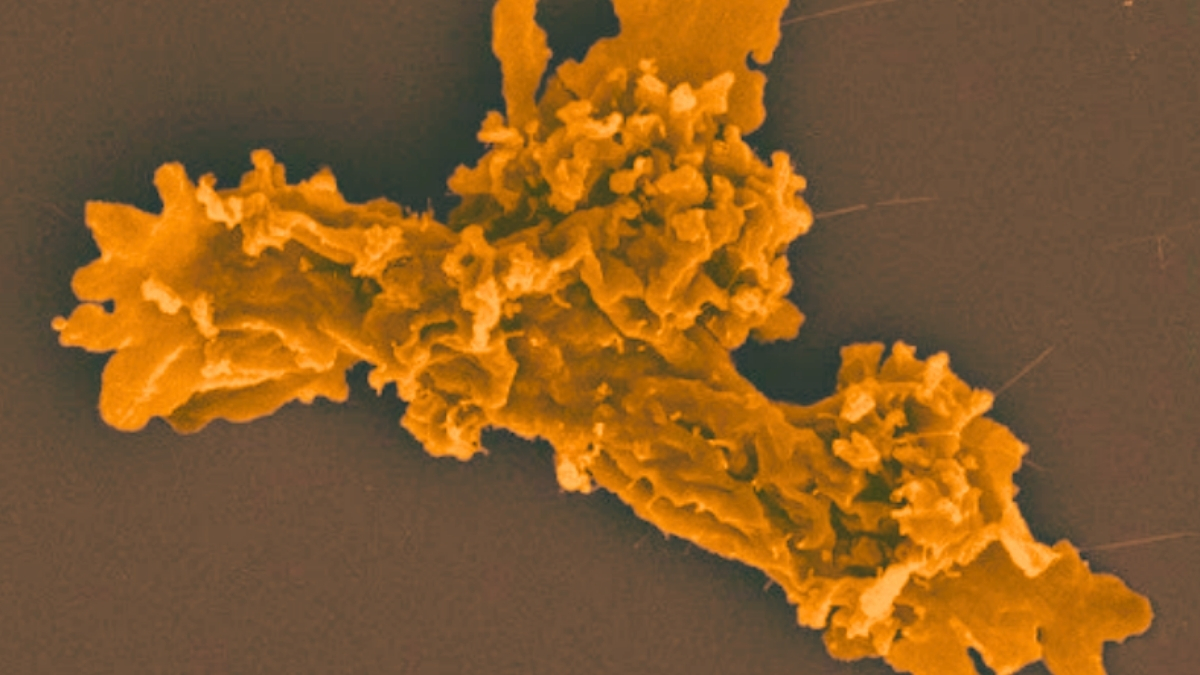
A newly discovered single-celled organism, Incendiamoeba cascadensis, found in California’s Lassen Volcanic National Park, has set a new record for heat tolerance among eukaryotes. This amoeba can grow and divide at temperatures up to 63°C (145°F), exceeding the previous eukaryotic limit of 60°C. It begins to grow only at temperatures of 42°C or higher, making it an obligate thermophile.
The research team, led by H. Beryl Rapaport and Angela Oliverio from Syracuse University, highlights that this discovery challenges existing notions about temperature constraints on eukaryotic life. Most living organisms thrive around 20°C, while I. cascadensis adapts to extreme conditions, demonstrating a remarkable ability to survive where other eukaryotes cannot.
The study involved cultivating specimens from 14 out of 20 sampled sites, observing that the amoeba maintained movement at 64°C and formed protective cysts as temperatures approached 66°C. Analysis of its genome revealed adaptations that allow it to withstand high heat, including specialized proteins and heat shock chaperones.
Interestingly, identical DNA sequences were also found in environmental samples from Yellowstone and New Zealand, suggesting that I. cascadensis may not be unique. This research could inform our understanding of life’s adaptability in extreme environments and the potential for life on other planets. The findings have been shared as a preprint on bioRxiv.
