



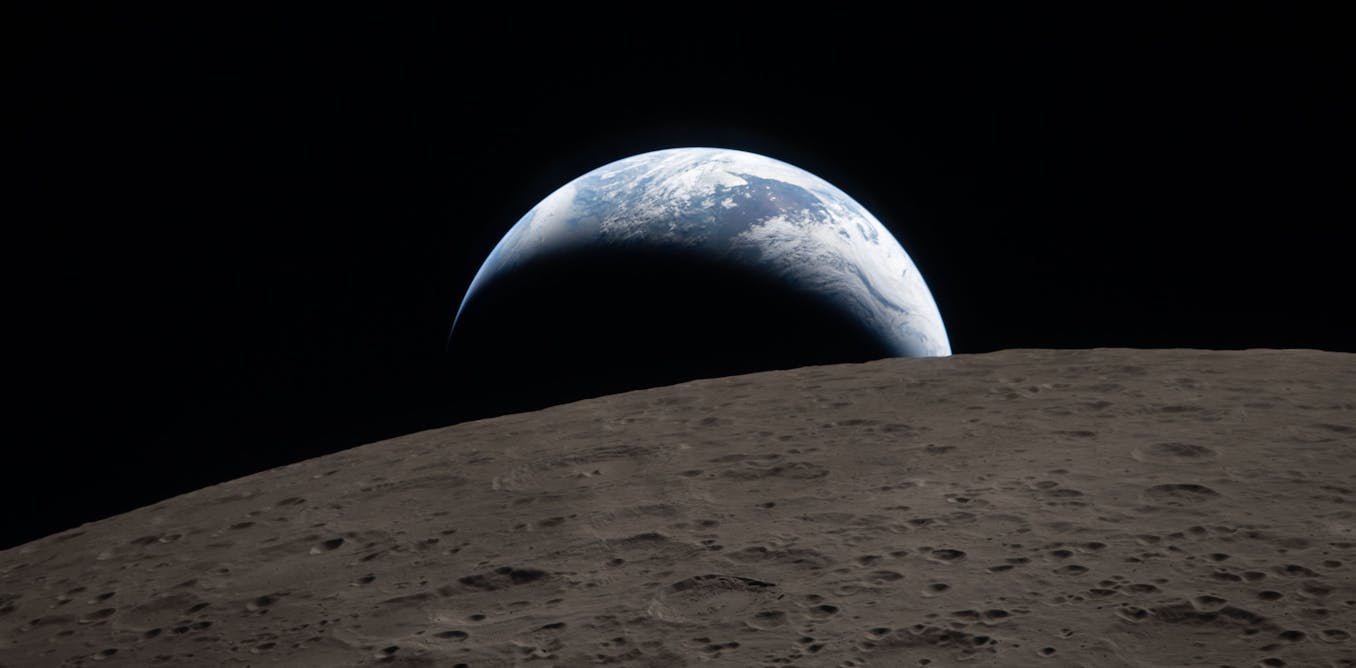
NASA’s Artemis II mission recently captured stunning images of Earth setting behind the moon, reminiscent of the iconic Earthrise photo taken during the Apollo 8 mission in 1968. The original Earthrise photo had a profound impact, inspiring the environmental movement by showcasing Earth as a vibrant oasis in the vastness of space.
In contrast, the photography approaches in 1968 and 2026 differ significantly. Apollo 8 astronauts were initially discouraged from taking photos of Earth, prioritizing other mission objectives. Their images were often haphazard and developed only after the mission, while Artemis II has photography as a main focus, using modern technology for clearer images.
The Artemis II crew, for instance, released a noteworthy photograph dubbed “Mother Earth,” showing the planet at night with enhanced lighting. Earthset, taken 5,000 miles from the moon, offers a partial view of Earth, unlike Apollo’s more complete Earthrise captured much closer to the lunar surface.
The environmental significance of these images remains to be seen, especially in the context of climate change. The crew expressed a commitment to Earth and emphasized the importance of inspiring awareness about its well-being, reinforcing their mission’s connection to both exploration and environmental consciousness.
Source link
