



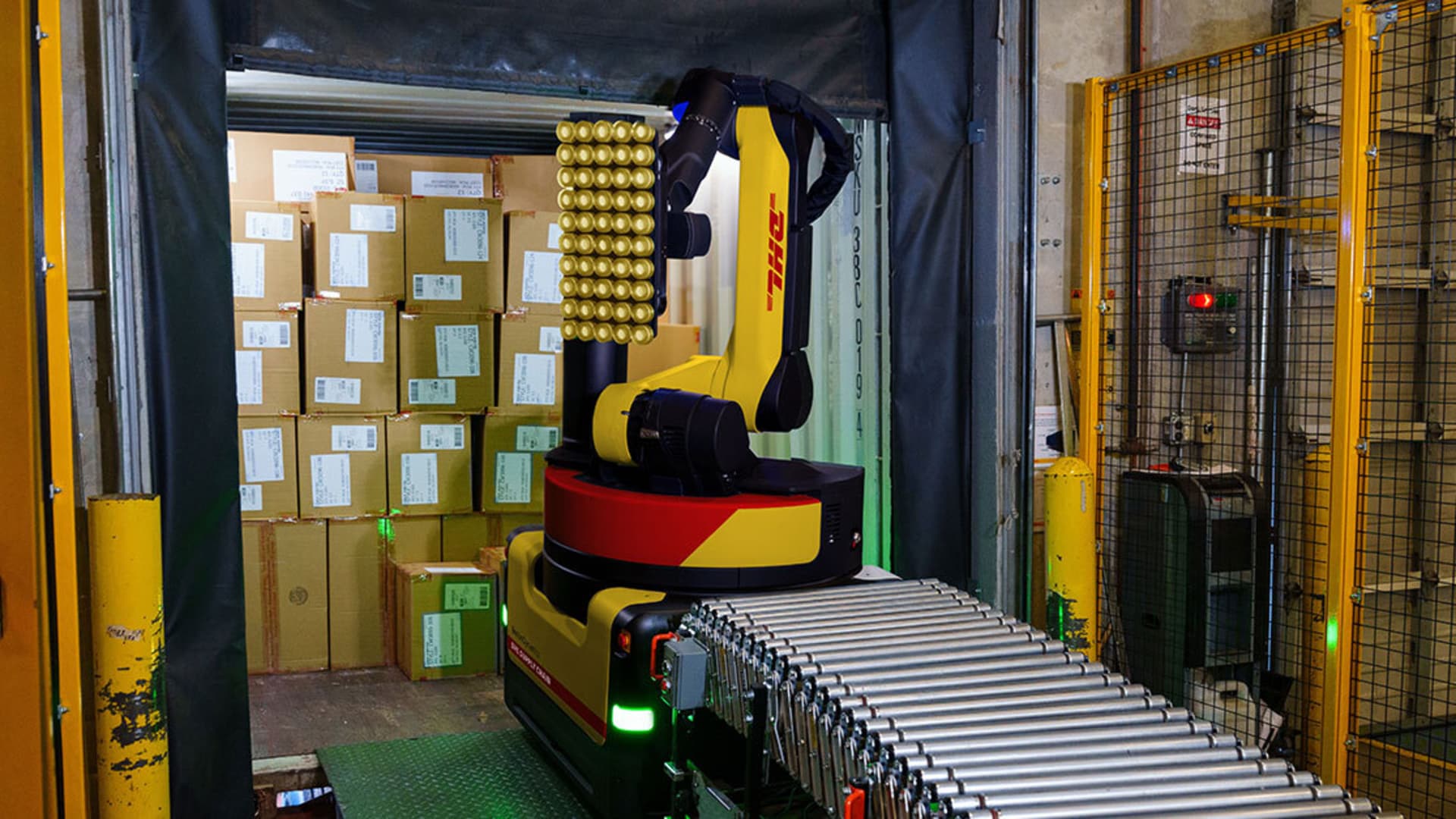
DHL is harnessing autonomous robots to streamline operations in its warehouses, significantly reducing the physical workload of employees who previously walked long distances to sort and move goods. The robots can unload containers at impressive rates and have enhanced efficiency in various tasks. Since 2020, DHL has expanded its automation projects from 240 to over 10,000, improving processes in 95% of its global warehouses.
Tim Tetzlaff, DHL’s global head of digital transformation, emphasized that the company aims to complement human labor with automation rather than replace it. For example, its item-picking robots have increased productivity by 30%, while autonomous forklifts have improved efficiency by 20%. Tetzlaff noted that the logistics industry faces challenges in finding labor and space for new warehouses, making automation increasingly crucial.
Other fulfillment companies, including UPS and FedEx, are also investing in automation technologies to enhance efficiency. UPS has automated numerous facilities and reduced its workforce as part of this transition. Meanwhile, FedEx is exploring partnerships for further automation initiatives.
The article highlights the ongoing balance between human workers and technology, with unions advocating for employee involvement in technological developments. Experts suggest that automation aims to fill gaps in workforce shortages rather than eliminate jobs. The logistics industry is expected to see increased investment in automation, with projections indicating a shift towards fully automated warehouses by 2040. Overall, the integration of robotics in logistics is seen as a pathway to improved efficiency and adaptability in a rapidly changing market.
Source link
