



Summary:
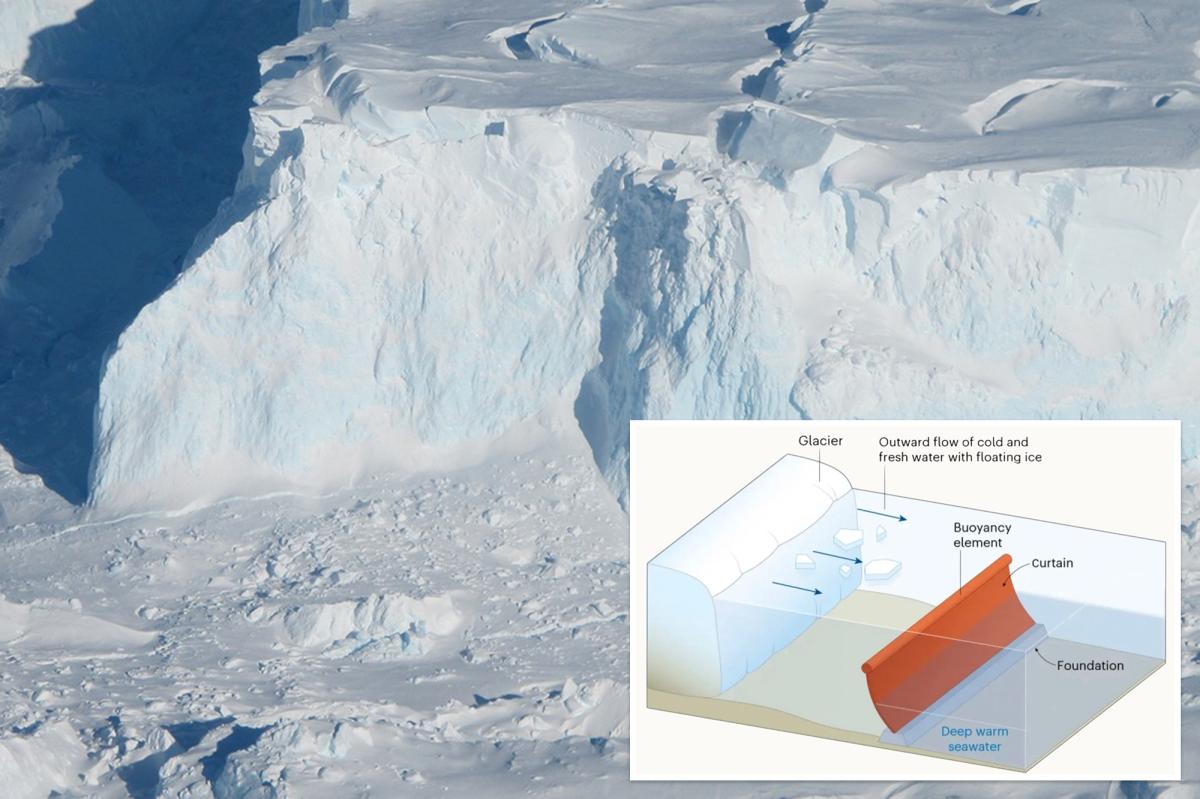
Antarctica’s Thwaites Glacier, often called the "Doomsday Glacier," is nearing collapse, which could lead to significant sea level rise. Scientists propose an unconventional solution: an 80-mile, 500-foot-tall curtain wall designed to block warm ocean currents and slow the melting process. Marianne Hagen, co-leader of the Undersea Curtain Project, emphasizes the need to try this approach despite its potential challenges and costs.
Thwaites Glacier has significantly retreated over the past 30 years, contributing to 8% of global sea level rise, and could elevate sea levels by about 2 feet if it fully melts, threatening coastal cities worldwide.
The flexible curtain wall would be anchored on the ocean floor and function like a protective barrier against warming waters, helping to mitigate ice loss while efforts to reduce global emissions continue. Testing for this project will take place over the next three years, with preliminary trials in more manageable conditions before considering deployment in Antarctica.
The estimated cost of the project could reach $80 billion, but proponents argue that this is a fraction of the potential trillions in damages from sea level rise if no action is taken.
