



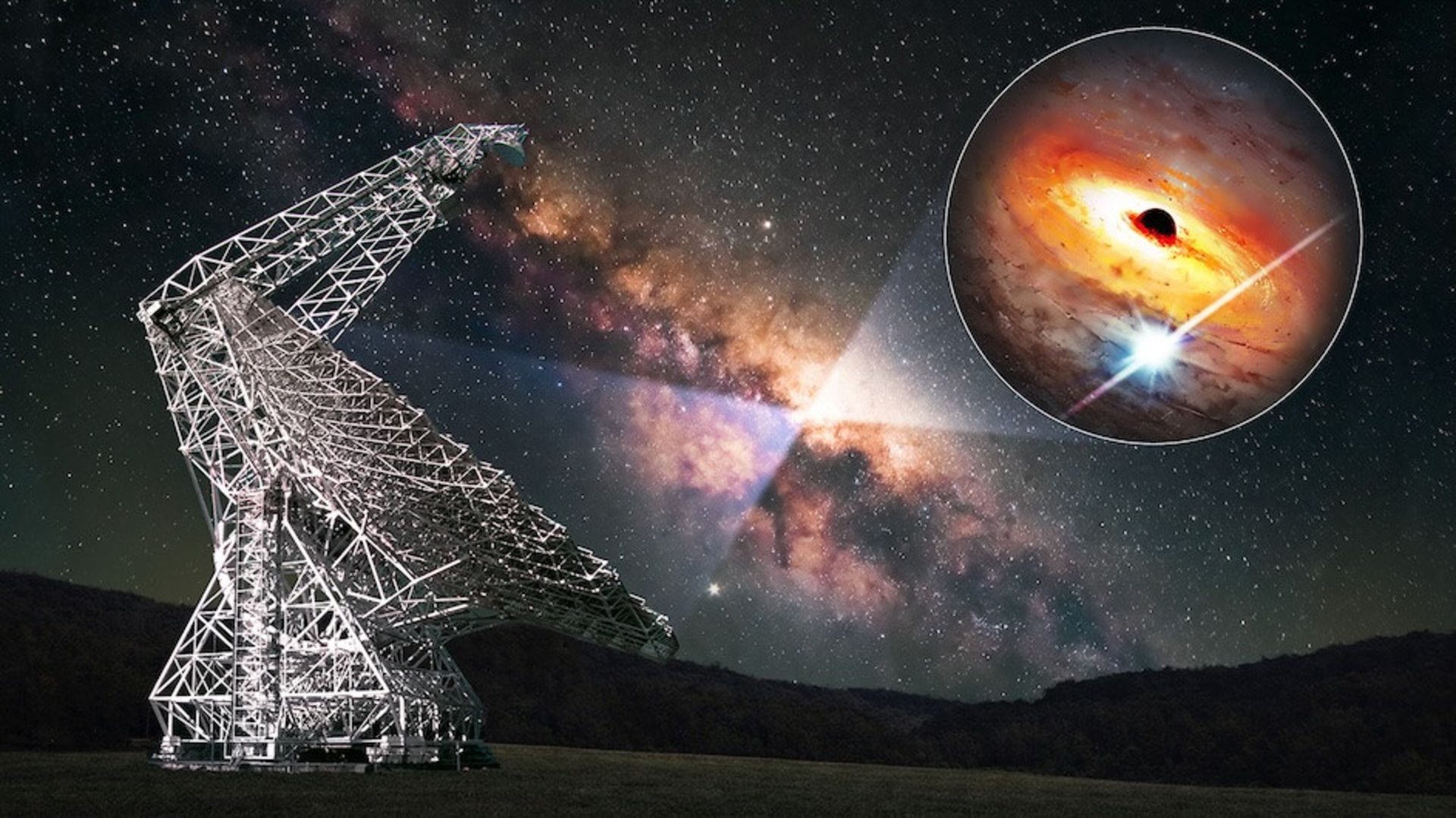
Researchers may have identified an ultra-dense pulsar at the center of the Milky Way, which could allow for testing of Einstein’s theory of general relativity. This pulsar, rotating every 8.19 milliseconds, is near Sagittarius A*, a supermassive black hole. Pulsars, known as “lighthouses of the universe,” emit beams of radio radiation with each rotation.
The findings, led by Karen Perez from the SETI Institute, appeared in The Astrophysical Journal. The pulsar’s rapid rotation makes it susceptible to the gravitational effects of nearby massive objects, potentially resulting in detectable anomalies in the light pulses reaching Earth.
Using data from the Breakthrough Listen program, aimed at spotting extraterrestrial signals, researchers highlighted the pulsar’s relevance for measuring spacetime distortions around black holes. Further research is needed to confirm the nature of the detected signal.
Source link
