



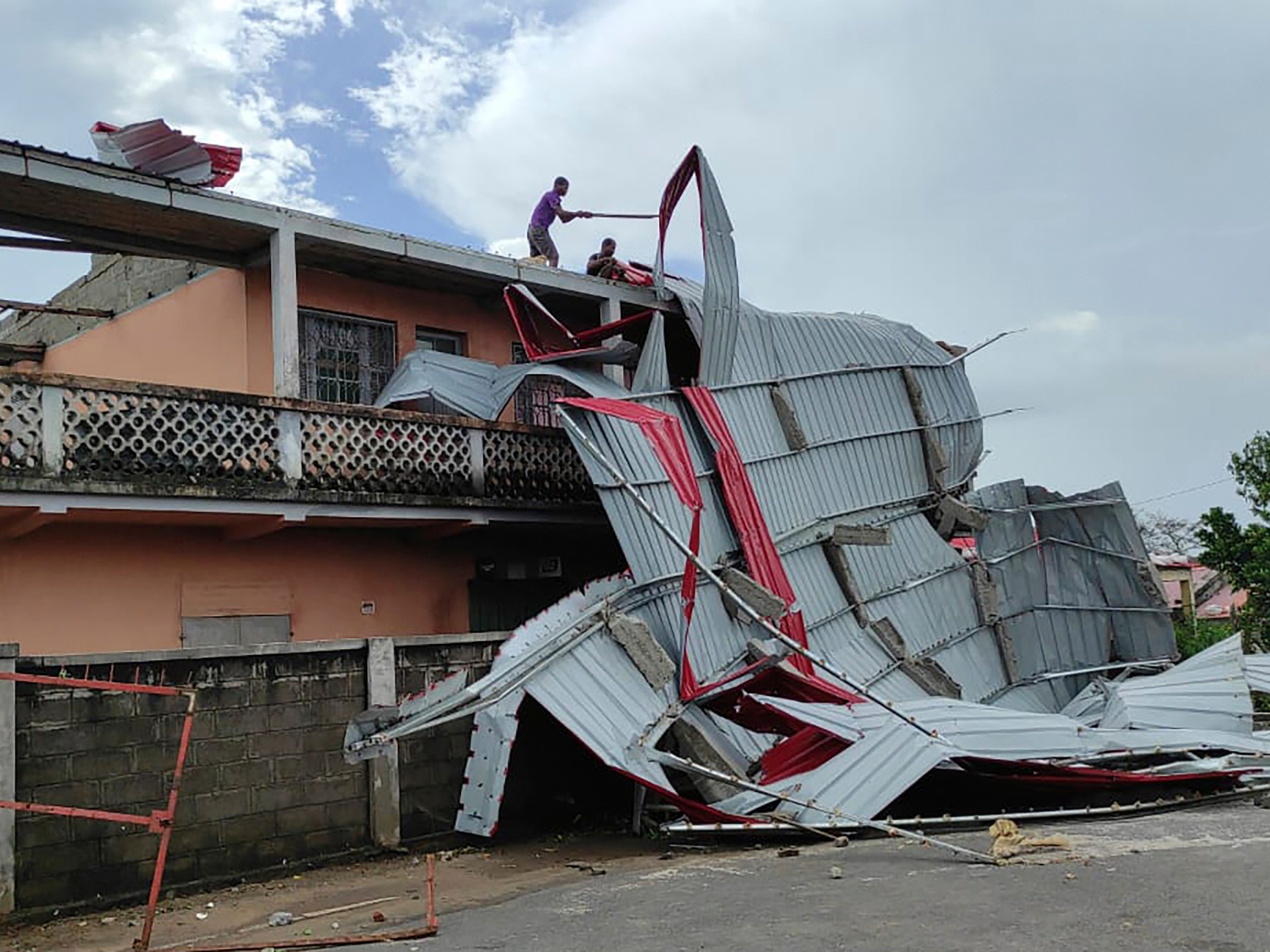
Cyclone Gezani struck Madagascar just 11 days after Cyclone Fitia, which resulted in 12 fatalities and displaced 31,000 people. The National Meteorological Agency reported severe damage as Gezani approached, forecasted to bring hurricane-force winds and heavy rainfall. A red alert was issued for several northeastern regions due to expected widespread flooding, flash floods, and landslides.
Residents in Toamasina reported extensive destruction, with homes damaged and power outages affecting communication. Colonel Michael Landrianilina, Madagascar’s current leader, planned to visit Toamasina to support affected individuals. The intensity of Gezani’s landfall was described as one of the most severe in recent memory, comparable to Cyclone Geralda in 1994.
While the cyclone weakened as it moved inland, it is anticipated to regain strength as it heads toward Mozambique. The U.N. humanitarian agency noted significant damage from previous storms, with extensive flooding affecting infrastructure and public health. Experts warn that climate change may lead to more intense tropical cyclones, putting island nations at greater risk.
Source link
