



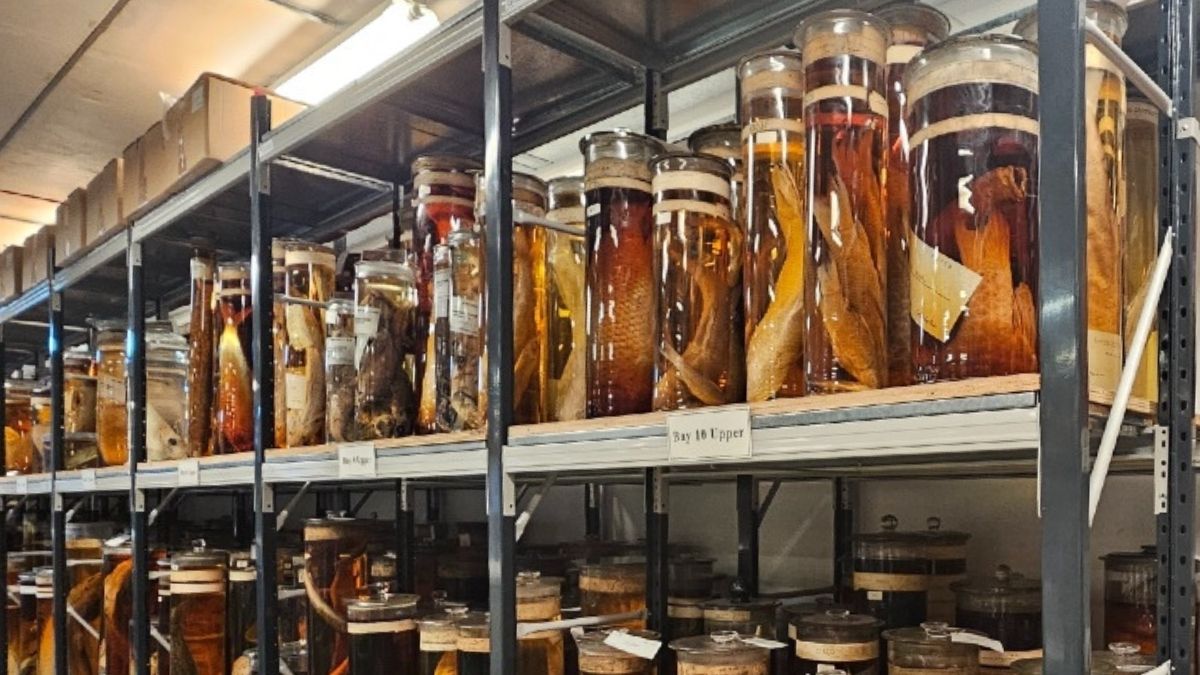
A collection of specimen bottles from Charles Darwin’s Galapagos voyage has remained unopened for 200 years in London’s Natural History Museum. Utilizing lasers, scientists have now unveiled the contents without risking damage to the specimens. Darwin’s theories of natural selection were founded on observations made during this voyage, and understanding the preservation methods used for the specimens is crucial for future research.
Previously, examining these specimens meant opening the bottles, which posed risks of contamination and environmental exposure. The study highlights the diverse preservation solutions used over time, including ethanol, methanol, and formaldehyde, leading to inconsistencies across collections.
To investigate without compromising integrity, researchers employed spatially offset Raman spectroscopy (SORS). This technique allows for accurate identification of the fluids within the bottles and revealed the materials used to construct the bottles themselves. The method successfully identified the preservative fluid in nearly 80% of the bottles tested.
Findings showed that mammals and reptiles were most often fixed in formalin and suspended in ethanol, while invertebrates were typically preserved in formaldehyde mixed with other substances. This research is significant not only for Darwin’s specimens but also for the preservation of liquid-preserved collections globally. The study was published in ACS Omega.
Source link
