



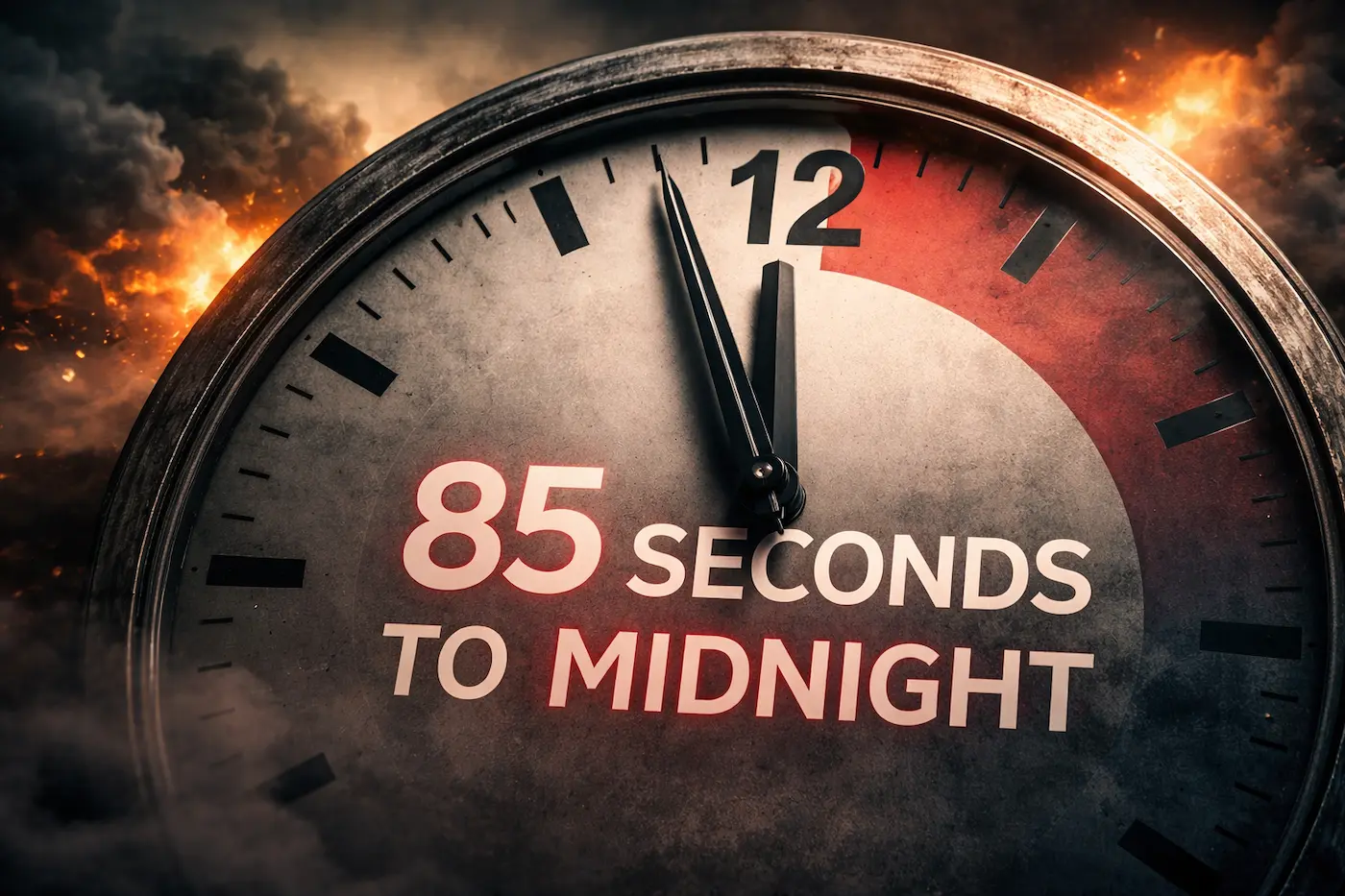
The Doomsday Clock, updated annually by scientists, symbolizes humanity’s proximity to self-inflicted catastrophe. In 2026, it was set to just 85 seconds to midnight, signaling the most urgent warning to date. This clock originated post-World War II, initially focused on nuclear war, but now encompasses threats from climate change, technology, and geopolitical instability.
The latest setting reflects escalating risks. Key factors influencing this urgency include:
-
Climate Change: Increasing extreme weather events, such as droughts and storms, underscore the reality of environmental threats. Despite global commitments to reduce emissions, fossil fuel use is rising again, sparking urgent concerns about agriculture, migration, and resource conflicts.
-
Nuclear Threats: The end of the Cold War didn’t eliminate nuclear risks. Disarmament treaties are stalled, and military tensions are increasing. An arms race among global powers raises the specter of potential miscalculations with dire consequences.
- Artificial Intelligence: AI technology poses both opportunities and risks. While it offers tools for progress, its potential misuse needs urgent regulation, as it could facilitate misinformation or even bioweapons.
The Doomsday Clock is ultimately a call to action, urging decisive efforts to phase out fossil fuels, renew arms control, and establish AI guidelines. Global cooperation, innovative incentives, and community engagement are essential to address these dangers. As time runs out, the clock serves as a reminder of our shared responsibility to act for the planet’s future.
