



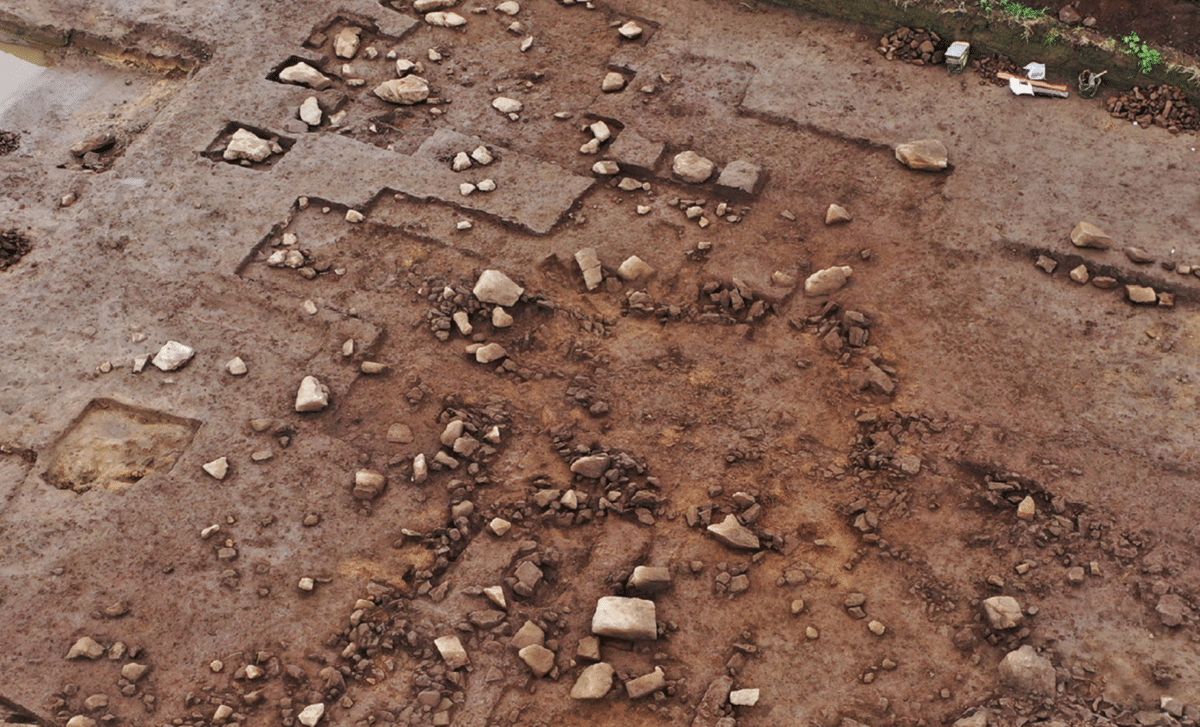
Archaeologists have uncovered a 6,300-year-old cemetery in Plouarnel, France, near the renowned Karnak Stone Column. This significant find includes standing stones, fire pits, and burial mounds, enhancing our understanding of early European rituals and community practices.
Led by Audrey Blanchard, researchers discovered evidence of long-term cultural and spiritual significance at Le Placequet. The site’s standing stone sockets and hearths indicate it was a site of repeated occupation over centuries, used for burying the dead and communal activities. Its strategic location overlooking the sea suggests symbolic ties to the natural landscape, highlighting the rituals performed there as part of a broader cultural framework.
Evidence of megalithic structures at Le Plascar shows a complex construction process, contradicting the belief that such monuments were built rapidly. Instead, they were developed over time, with each construction phase contributing to the cultural landscape.
Additionally, the discovery of fire pits next to standing stones points to their role in communal cooking and ritualistic practices. These pits contained remnants that suggest they were used for communal feasts and possibly linked to death rituals or seasonal events.
Interestingly, the site also demonstrates a practice of reusing stones over generations. While the standing stones have vanished, their sockets remain, indicating a ritualistic removal process. This recycling of materials reflects the community’s connection to its cultural heritage, ensuring continuity between past and present rituals.
Source link
