



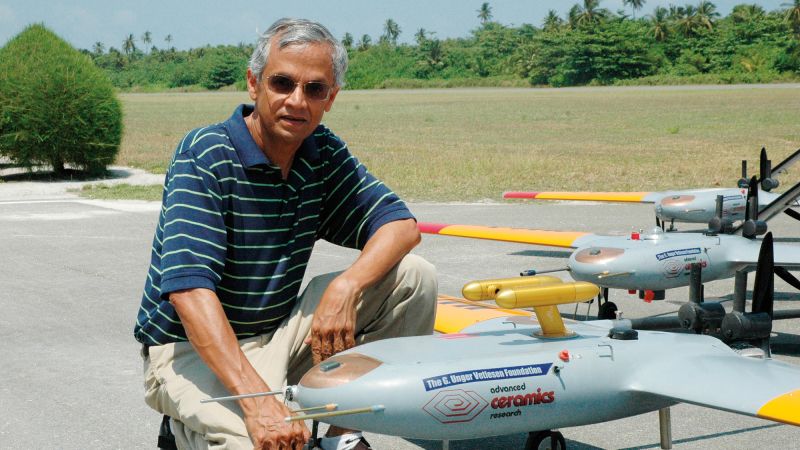
Scientist Veerabhadran Ramanathan, who grew up dreaming of the American Dream in southern India, became a pivotal figure in climate science after discovering the significant greenhouse effects of chlorofluorocarbons (CFCs) in the 1970s. Despite working as a postdoctoral fellow at NASA, his groundbreaking research on CFCs showed they trap heat far more effectively than carbon dioxide, thus reshaping scientific understanding of global warming.
Initially published in 1975, Ramanathan’s findings faced skepticism, but they eventually established that gases beyond CO2 significantly contribute to global warming. This knowledge informed early climate mitigation policies, including the 1987 Montreal Protocol, which banned CFCs due to their harmful environmental impacts. His research revealed that without this ban, global temperatures could have risen by an additional degree Celsius.
Recognized recently with the Crafford Prize, Ramanathan’s work highlights the interplay of various greenhouse gases and their long-term effects on climate change. He has also conducted extensive research using satellites and other technologies, uncovering important interactions in the Earth’s atmosphere, including the cooling effects of clouds and the role of water vapor in amplifying warming.
Ramanathan emphasizes the ethical dimensions of climate change, particularly its disproportionate effects on the poor, and encourages young people to be politically engaged and promote science-based solutions. Now 81, he drives an electric car and is committed to renewable energy, while advocating for systemic change in addressing the climate crisis.
Source link
