



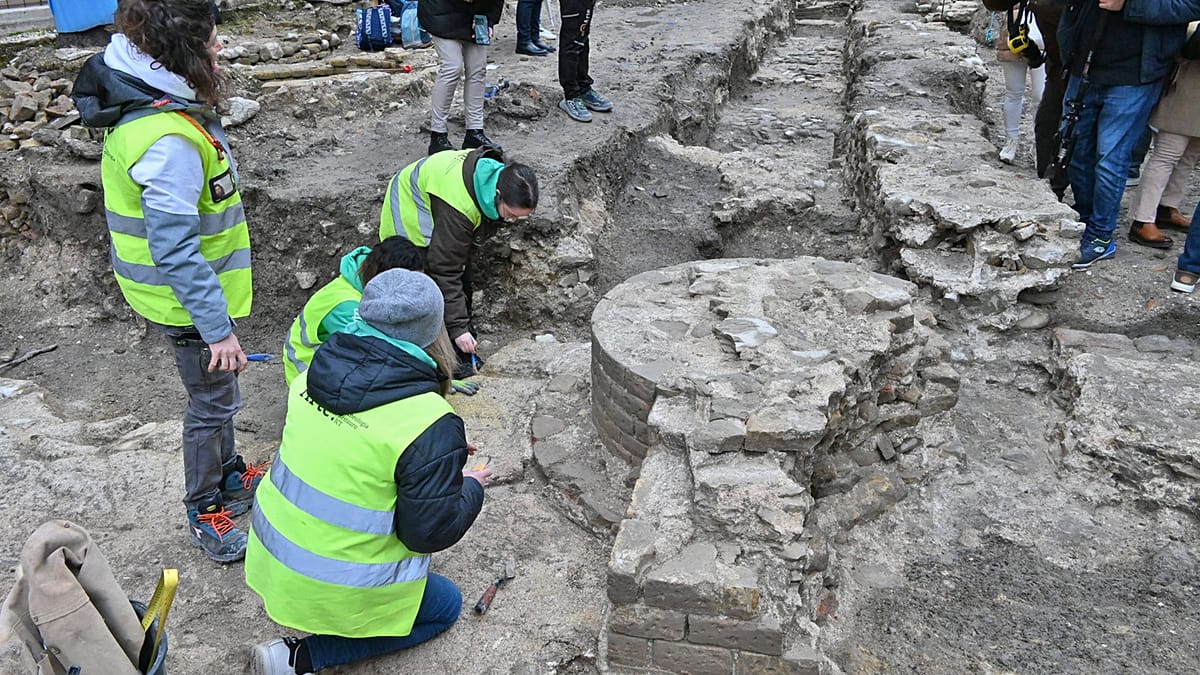
Archaeologists in Italy have discovered the remains of a 2,000-year-old basilica designed by the pioneering Roman architect Vitruvius during excavations for Plaza Andrea Costa in Fano, Le Marche. Culture Minister Alessandro Giuli compared this find to the discovery of Tutankhamun’s tomb, emphasizing its historical significance.
This cathedral, which can be directly attributed to Vitruvius, is the only known building based on his design. Vitruvius is known for his work “De Architectura,” the first complete architectural treatise from antiquity, influencing artists like Leonardo da Vinci. He described the cathedral as a grand public space for justice and business, but its location became a mystery over the centuries.
Fano Mayor Luca Serfilippi expressed excitement over the discovery, deeming it a crucial part of Italy’s heritage. Giuli highlighted the importance of this find for Fano’s identity and stated it would enhance public awareness of archaeological research. Officials anticipate that the discovery will boost international interest in Fano, which houses the Vitruvian Research Center. Ongoing investigations at the site aim to determine how much of the cathedral remains and whether it can be opened to the public.
Source link
