



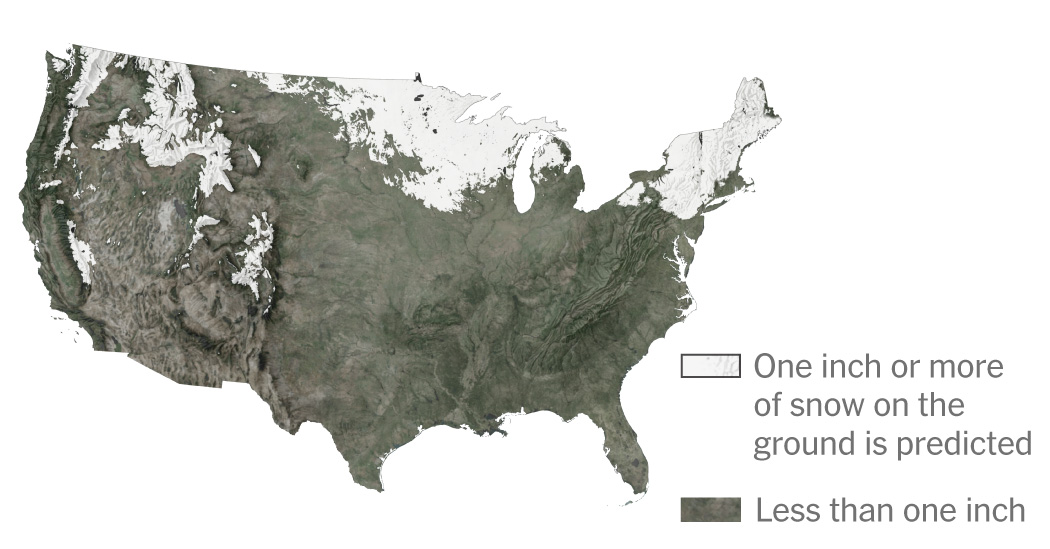
In the eastern U.S. and Canada, early December snow has created festive scenes, but warmer weather threatens to turn snow into slush as Christmas approaches. The National Weather Service (NWS) states that for a “white Christmas,” there must be at least 1 inch of snow on the ground, while Environment Canada requires 2 centimeters (about 0.8 inches). This year, the prospects for a white Christmas look bleak, especially in the northeastern U.S. and Atlantic Canada, where temperatures have been above average.
Meteorologists are monitoring developments that could bring snow to certain areas, but the outlook is grim for many. Notably, New York City experienced its first white Christmas in 15 years last year, achieving just the minimum snow requirement. The decline in white Christmases has been noted in recent climate studies, with long-term data indicating a decrease in snowfall probability across many regions.
Interestingly, the song “White Christmas,” written by Irving Berlin in sunny California, reflects this longing for a snowy holiday. While a significant storm is expected to hit California’s Sierra Nevada mountains, forecasters warn of treacherous road conditions for travel. As global warming influences weather patterns, dreams of a white Christmas may increasingly remain just that—dreams.
Source link
