



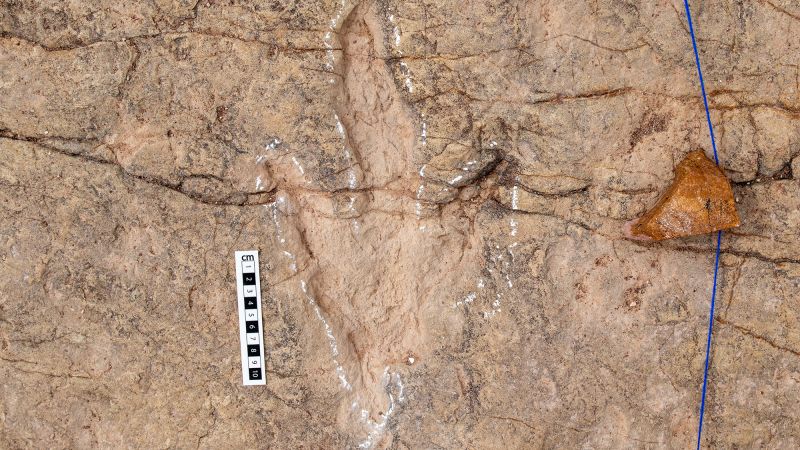
Paleontologists have discovered a remarkable site in Bolivia’s Toro Toro National Park, revealing 16,600 theropod dinosaur footprints, making it the largest of its kind. These footprints date back to the end of the Cretaceous period (101-66 million years ago) and cover an area of about 80,570 square feet. This marks the first detailed survey of the site, indicating it was a major thoroughfare for theropods, possibly part of a broader “dinosaur highway” across South America.
The footprints provide insights into the movement of these carnivorous dinosaurs, showcasing a variety of walking styles—some leisurely and others rapid, with evidence of shallow-water swimming tracked by the impression of their toes. The sizes of the footprints suggest a range of theropod sizes, indicating diverse species and age groups might have coexisted.
Researchers highlighted the value of these footprints in reconstructing ancient ecosystems, noting that unlike skeletal remains, footprints offer a direct link to the behaviors and movements of these animals. Questions remain about the site’s unique abundance of theropod tracks compared to other dinosaur sites in Bolivia, inviting further exploration of the region’s paleontological significance.
Source link
