



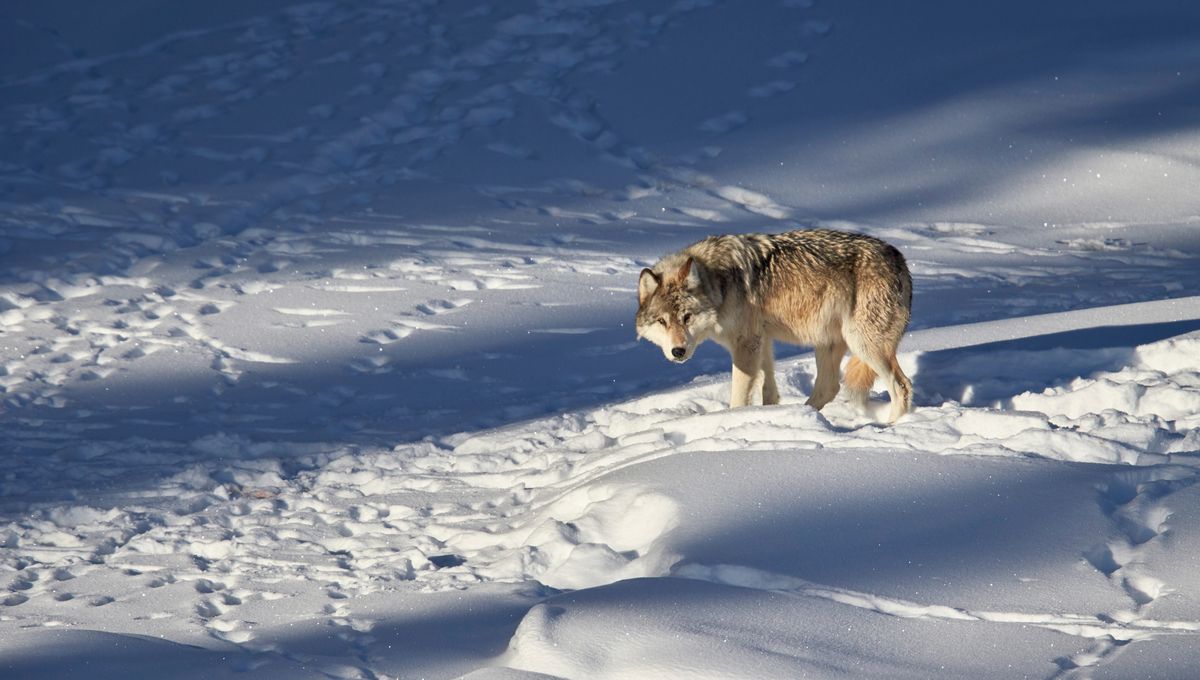
The article discusses the significant ecological impact of the reintroduction of wolves to Yellowstone National Park in 1995 after a 70-year absence. Wolves, as apex predators, play a crucial role in maintaining the ecosystem’s balance. Their absence led to overpopulation of prey species like elk, resulting in vegetation damage, including a decline in willow and poplar growth.
Since the wolves returned, there have been observable ecological changes, with willow abundance significantly increasing. This phenomenon, known as a trophic cascade, illustrates how the presence of wolves can indirectly benefit other species and plant life in the ecosystem.
However, a recent study challenged the strong claims made about these positive ecological effects, arguing that methodological flaws could lead to misleading conclusions. The rebuttal contends that Ripple and his colleagues did not accurately capture the data, leading to an oversimplified understanding of the trophic cascades in Yellowstone.
Despite the controversy, Ripple’s team remains confident in their findings and is committed to further research on the intricate dynamics of the Yellowstone ecosystem, particularly regarding how reintroduced carnivores affect plant and animal populations over time. The ongoing debate underscores the complexity of ecological recovery and the lasting impact of species reintroductions in natural environments.
Source link
